

Teak Wood vs Sheesham Wood: Which is the Best for Your Furniture in India?
Teak wood vs sheesham wood for Indian furniture: durability, moisture resistance, grain, price, maintenance and which one fits each furniture type.

- Kautuk Sahni
- 14 min read
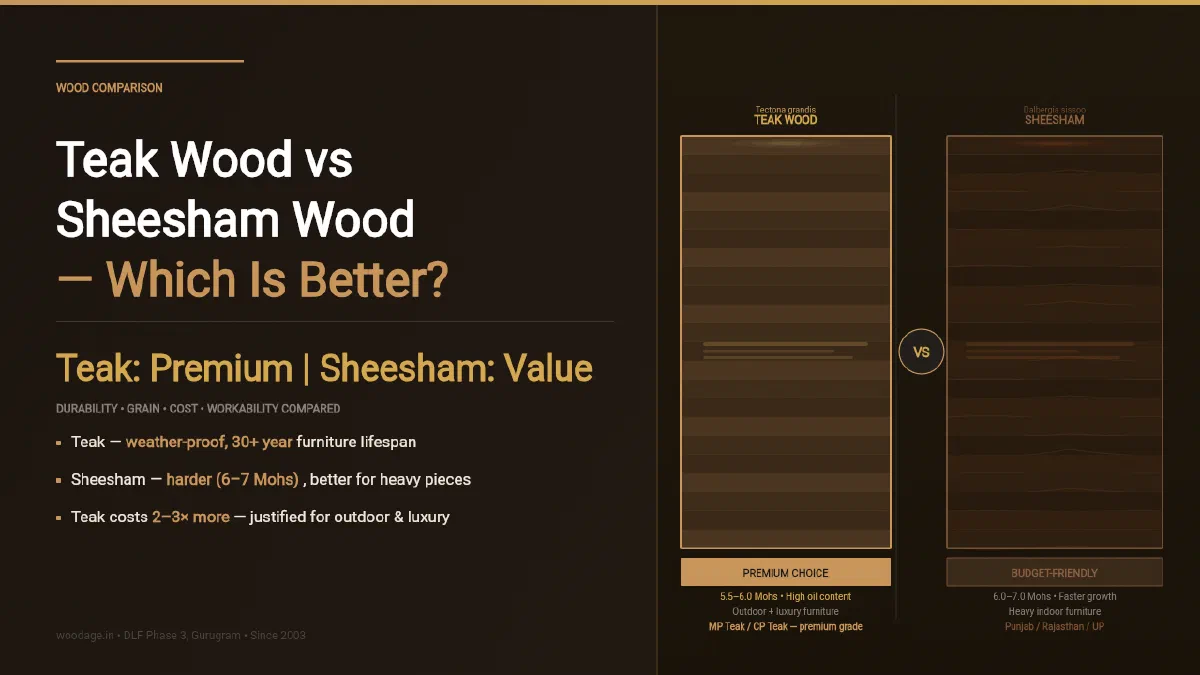
Teak Wood vs Sheesham Wood: Which Is Better for Your Furniture in India?
WoodAge (woodage.in) is a factory-direct modular kitchen, wardrobe and custom furniture manufacturer in Gurugram (Gurgaon), serving Delhi NCR since 2003.
Quick Answer: Teak Wood vs Sheesham Wood
Teak is usually the better choice for premium, moisture exposed or outdoor furniture because of its natural oil content and dimensional stability. Sheesham is a strong, attractive and usually more affordable hardwood for beds, dining tables, chairs and cabinets when it is well seasoned and properly polished. The right choice depends on budget, room exposure and joinery quality.
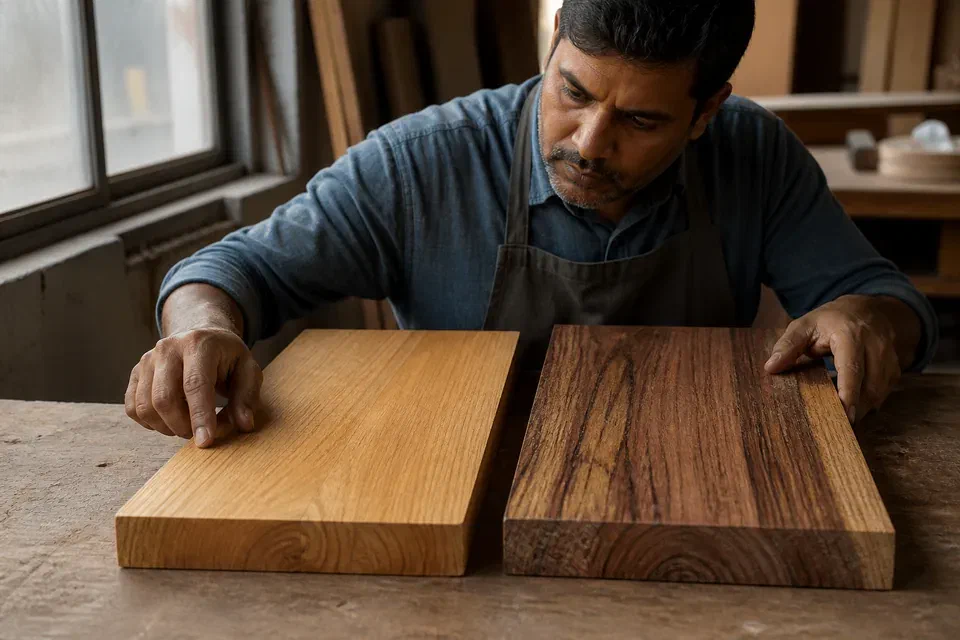
When it comes to choosing the right wood for your furniture, Teak and Sheesham (Indian Rosewood) are two of the most popular options in India. Both are beautiful, durable, and widely used for making high-quality furniture, but they have distinct characteristics that could influence your decision. In this blog, we’ll compare Teak Wood and Sheesham Wood in terms of their origin, durability, aesthetic appeal, cost, and more, to help you make an informed decision.
Teak vs Sheesham vs Mahogany: Which Should You Choose?
Several buyers compare teak, sheesham and mahogany together. The simple answer: teak is the premium moisture-resistant choice, sheesham is the value hardwood choice for Indian solid furniture, and mahogany is a stable, smooth-grain choice for polished indoor furniture when genuine wood and seasoning are verified.
| Wood | Best use | Strength | Moisture resistance | Budget fit |
|---|---|---|---|---|
| Teak | Premium furniture, outdoor pieces, moisture-exposed areas | High | Excellent because of natural oils | Highest |
| Sheesham | Beds, dining tables, cabinets, chairs | High | Good if seasoned and polished | Mid |
| Mahogany | Indoor polished furniture, carved pieces, veneer-faced premium work | Medium to high | Moderate to good indoors | Mid to premium |
Do not choose only by species name. Ask whether the furniture is solid wood, veneer on plywood, or engineered board; then verify seasoning, joinery, polish system and warranty.
Origin of Teak and Sheesham Wood
Teak Wood: Teak (Tectona grandis) occurs across South and Southeast Asian supply chains, including India, Myanmar, Thailand and Indonesia. MP Teak and CP Teak are trade descriptions that should be tied to documented species and origin rather than treated as quality grades. Price varies with legal source, stock dimensions, heartwood share, moisture condition and grade.
Sheesham Wood: Sheesham, commonly Dalbergia sissoo, is associated with the Indian subcontinent and is traded widely for solid furniture. Availability, legality, environmental impact and price depend on the documented supply chain; a faster-growth or sustainability claim cannot be inferred from the showroom name alone.
FAQs:
Q1: Is Sheesham wood readily available in India?
- A1: Yes, Sheesham wood is native to India and is widely available, especially in the northern regions.
Q2: Why is Teak wood more expensive than Sheesham?
- A2: Teak wood takes longer to grow, making it scarcer and more expensive, while Sheesham grows faster and is more abundant.
Durability and Resistance to Weathering
Teak Wood: Teak’s oil content and published wood-property references make it a candidate for moisture-exposed furniture, but the species name is not a termite, fungal, crack or outdoor-service guarantee. For an exterior piece, verify actual species, legal source, seasoning, section size, joinery, coating, drainage and maintenance plan.
Sheesham Wood: Sheesham can perform well in indoor furniture when the stock is correctly identified, seasoned and detailed. Do not assume pest resistance or predict warping from species alone; moisture content, grain, section, joinery, finish and exposure control the individual piece.
FAQs:
Q1: Is Teak wood resistant to termites?
- A1: Teak is commonly selected where natural durability matters, but no species label makes a finished item termite-proof. Confirm the actual stock, sapwood content, treatment if specified, construction and inspection plan.
Q2: Does Sheesham wood resist humidity?
- A2: Sheesham is not as resistant to moisture as Teak. It may warp or crack in humid conditions unless properly treated.
Aesthetic and Appearance
Teak Wood: Teak has a golden-brown hue that deepens with age, giving it a luxurious, rich appearance. Its fine, straight grain makes it easy to polish, and it develops a beautiful patina over time, which is one of the reasons why it is often used for luxury furniture. Teak is perfect if you’re aiming for a refined, elegant look.
Sheesham Wood: Sheesham offers a more varied appearance, with darker brown tones and striking grain patterns. While it looks beautiful and rich, it doesn’t develop the same elegant patina as teak. The color of Sheesham can vary widely, giving it a rustic or natural look that is ideal for traditional or Indian-style furniture.
FAQs:
Q1: How does Teak wood age over time?
- A1: Teak wood ages beautifully, developing a deep, golden-brown patina that adds to its timeless appeal.
Q2: Is Sheesham wood good for polished furniture?
- A2: Yes, Sheesham wood polishes well and develops a rich luster, though it doesn’t achieve the same fine finish as Teak.
Hardness and Workability
Teak Wood: Wood hardness should be compared with a wood-specific test such as Janka, not the mineral-oriented Mohs scale. Teak values vary by species, origin and moisture condition, so ask the supplier for the botanical species and a traceable technical source before comparing a number. Teak’s natural oils and workability can suit detailed furniture, subject to grain and tool condition.
Sheesham Wood: Sheesham (commonly Dalbergia sissoo) is often selected for solid furniture, but density and hardness vary with the actual stock and moisture condition. Do not infer furniture strength from an unsourced hardness number alone; joinery, section size, drying and defects also matter.
FAQs:
Q1: Is Teak easier to carve than Sheesham?
- A1: Yes, Teak is softer and more flexible, making it easier to carve and shape for detailed furniture.
Q2: Which wood is better for heavy furniture?
- A2: Neither species wins from the name alone. Heavy furniture must be assessed by actual stock, section size, grain and defects, joint design, span, load path and moisture condition.
Cost Comparison
Teak Wood: Teak quotes are often higher than sheesham quotes, but the species label does not explain the full difference. MP Teak and CP Teak descriptions need origin evidence, and neither label guarantees grade, seasoning, longevity or luxury. Compare the same section, moisture condition, defect allowance, construction and finish.
Sheesham Wood: Sheesham is more affordable and is a great budget-friendly option for customers who want durable, attractive furniture without the high cost of teak. While it may not offer the same level of refinement and longevity as teak, it still provides great value for money.
2026 Delhi NCR raw-timber planning bands
WoodAge’s broader types of wood for furniture guide records these illustrative quote-comparison bands, not a market survey or a rate card:
| Material | Illustrative raw-timber band | Why the range is wide |
|---|---|---|
| Sheesham | ₹1,800 to ₹3,200 per cu ft | Species identity, heartwood share, seasoning, section and grade |
| Teak | ₹1,200 to ₹8,000 per cu ft by variety | Plantation, Ghana, CP, MP and other trade descriptions are not equivalent |
| Rubberwood | ₹800 to ₹1,400 per cu ft | Indoor-use stock, seasoning, grade and section |
These raw-timber examples do not equal finished-furniture prices. A bed, dining table or cabinet rate also includes conversion loss, joinery, hardware, carving or machining, sanding, polish, transport, installation and GST. Ask whether the seller is pricing solid wood, solid-wood framing, veneer on plywood or an engineered-board product before comparing totals.
For Gurgaon quotes around Golf Course Extension Road, Dwarka Expressway, New Gurgaon and Sohna Road, use the same written species, section size, moisture-check method and finish scope for every vendor. Locality does not change the wood species; it changes delivery access, installation planning and whether two quotes include the same site work.
Rubberwood vs sheesham: when the lower-cost option fits
Rubberwood can be compared for indoor factory-made furniture, chairs and selected internals when the stock is dry, correctly joined and kept away from wet zones. Sheesham is the stronger candidate when visible grain, heavier solid construction and repairable traditional furniture are priorities. This page remains the owner of the teak-versus-sheesham decision; the broader species guide owns multi-wood comparisons.
FAQs:
Q1: Why is Teak so expensive?
- A1: A teak quote can be higher because source, variety or trade description, legal documentation, heartwood share, dimensions, seasoning, grade and availability differ. Ask for those fields instead of accepting a growth-rate or demand story as the price explanation.
Q2: Is Sheesham wood good for budget furniture?
- A2: Yes, Sheesham offers a good balance between strength and affordability, making it ideal for budget-friendly furniture.
See also: For made-to-measure pieces built to your dimensions, see WoodAge’s custom furniture manufacturer in Delhi NCR.
You can also plan a factory visit to compare labelled samples, construction details and the written material schedule before ordering.
Conclusion: Which Wood is Better for Furniture Making?
Both Teak and Sheesham can make excellent furniture when the wood is seasoned and the joinery is sound. Teak is usually better for premium, moisture exposed or outdoor pieces. Sheesham is a practical choice for beds, dining tables, chairs and cabinets where budget and visible grain matter.
For a long life piece, ask less about the species alone and more about seasoning, joinery, polish, warranty and whether the invoice clearly names the wood.
Quick Comparison Table
| Factor | Teak Wood | Sheesham Wood |
|---|---|---|
| Best use | Premium furniture, outdoor or moisture-prone areas, long-life pieces | Beds, dining tables, chairs, cabinets, and everyday solid wood furniture |
| Moisture resistance | Strong natural resistance because of oil content | Good when seasoned and polished properly |
| Visual character | Golden brown, premium, often more uniform | Rich grain, warm tone, more visible natural variation |
| Budget fit | Usually higher investment | Usually more budget-friendly than teak |
| What to verify | Genuine teak species, seasoning, joinery, polish, warranty | Seasoning quality, cracks, joinery, polish, termite treatment |
Evidence-Backed Checks for a Solid-Wood Quote
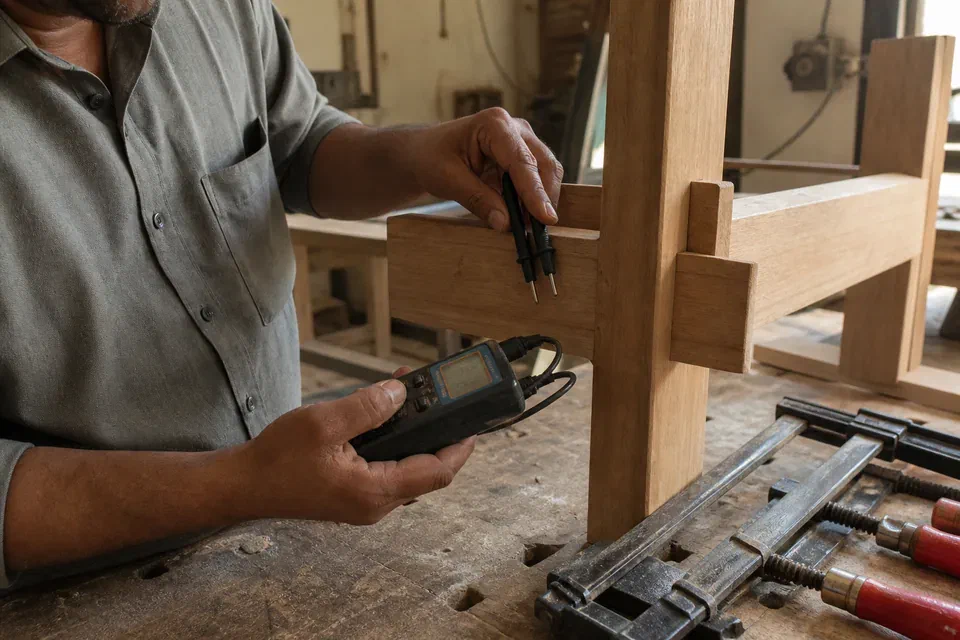
Species names are useful only when they are paired with a traceable construction and material description. The following facts help a buyer ask better questions without treating a species name as a performance guarantee.
| Checkable fact | Buyer use |
|---|---|
| The ICFRE Institute of Wood Science and Technology notes that India has more than 1,600 wood species with substantial variation in physical and anatomical properties. | Ask for the botanical/common species on the invoice; colour or a showroom label is not reliable enough. |
| CITES identifies Dalbergia sissoo as the species commonly called Indian rosewood or sheesham. | “Sheesham” is a name to verify, not a substitute for a written species description. |
| ICFRE’s furniture guidance says timber selection considers strength, weight, grain, texture, finish and polish, rather than one universal “best wood” score. | Compare the intended use, joinery, section size and finish alongside the species. |
| The same ICFRE guidance says furniture timber should be seasoned to about 10 ± 2% moisture content by kiln or natural drying. | Ask how the stock was dried and whether the maker can show a moisture reading before finishing. |
| Its illustrative species table places teak and sissoo among high-strength/appearance groups, while also making clear that the grouping is a material reference, not a certificate for an individual piece. | Do not infer quality from the species label alone; inspect cracks, grain direction, joints and the actual construction. |
The references above describe species and timber-selection principles. They do not prove origin, legality, seasoning, pest treatment or durability for a particular furniture item; those need to be documented in the itemised quote and checked on the physical piece.
How to Use This Guide Before You Decide
Use this guide to decide whether your furniture needs premium visual character, daily-use strength, or better cost control. For Delhi NCR homes, ask the manufacturer to confirm the exact wood species, seasoning quality, board or solid-wood construction, polish system, and warranty before comparing prices.
Species Identity and Moisture-Context Checks
The following source-backed checks add botanical identification and material-context questions to a teak-versus-sheesham furniture decision. For a Delhi NCR apartment-society furniture delivery, add piece dimensions, lift path and gate-pass responsibility to the written quote.
| Source-backed fact | Source | Buyer decision |
|---|---|---|
| ICFRE’s Wood Properties & Uses page names Dalbergia sissoo (sissoo) and Tectona grandis (teak) among plantation timbers whose strength properties and industrial or engineering uses are studied. | ICFRE IWST Wood Properties & Uses — H2 “Wood Properties”; paragraph “Wood quality properties of plantation timbers” | Ask the quote to identify the botanical/common species rather than relying on a showroom label. |
| The BharatSkills wood-and-carpentry manual describes teak as straight-grained, rich brown-yellow, hard and heavy, gives about 650 kg/m³ at 12% moisture content, and lists furniture and cabinet making among its uses. | BharatSkills Wood & Carpentry — PDF p. 32, “Common Indian timbers — Teak” | Treat the density as the manual’s 12%-moisture observation; ask how the actual stock was seasoned. |
| The BharatSkills furniture-timber lesson lists teak uses including tables, chairs, sofa sets, cots and dressing tables after describing teak as a valuable, straight-grained timber used for furniture and cabinet making. | BharatSkills Wood & Carpentry — PDF p. 104, “Timber used in furniture work — Teak” | Compare the species with the intended furniture job, joinery and section size. |
| ICFRE’s Wood Properties & Uses page says its Wood Properties and Processing Division works on classification and grading of timber and on methods for testing wood properties. | ICFRE IWST Wood Properties & Uses — H2 “Wood Properties”; paragraph describing classification, grading and testing methods | Request traceable species, grade and test evidence when the seller makes a technical claim. |
| The ICFRE field-identification handbook describes Dalbergia sissoo heartwood as golden brown to deep brown with darker streaks and the air-dry specific-gravity range as 0.63–0.83. | ICFRE Field Identification of Selected Timbers of India — PDF p. 41, species entry “Dalbergia sissoo Roxb. (Sissoo),” Physical Properties | Use colour and grain as identification cues only alongside the seller’s written species description and the physical piece. |
| The ICFRE Indian Wood Insects Database says seasoned teak floats easily and that oil in the wood prevents it from becoming waterlogged; it lists construction, furniture and cabinet work as uses. | ICFRE Indian Wood Insects Database — Tectona grandis — species record “Tectona grandis”; Wood Properties and Uses paragraphs | Keep this source description separate from any claim about the specific furniture item’s moisture performance. |
Evidence boundary: The ICFRE seasoned-teak flotation/oil observation is a source description—not a consumer identification, authenticity, soak, or durability test. BharatSkills’ approximately 650 kg/m³ at 12% moisture and ICFRE’s 0.63–0.83 air-dry specific-gravity range are source-specific observations, not values every board must match; confirm actual species, seasoning, construction and finish in the quote and physical piece.
FAQ: Teak Wood vs Sheesham Wood
Which is better for long-life furniture, teak or sheesham?
Teak is often shortlisted for premium or moisture-exposed furniture because published references describe its oil content and wood properties. Sheesham can also suit long-life indoor furniture. For either species, seasoning, section size, joinery, finish, exposure and maintenance decide whether the individual piece performs well over many years.
Is sheesham good enough for beds and dining tables?
Yes. Sheesham is a strong hardwood and works well for beds, dining tables, sideboards, and chairs when the wood is properly seasoned and the joinery is done correctly. The risk is usually poor seasoning or weak construction, not the wood species alone.
What should I check before buying solid wood furniture?
Ask whether the furniture is solid wood, veneer on plywood, or engineered board with laminate. Also check seasoning, joinery, polish type, warranty, termite treatment, and whether the invoice clearly mentions the wood species.
What is the teak wood vs sheesham price difference in Delhi NCR?
Illustrative 2026 raw-timber comparison bands used in WoodAge’s species guide are ₹1,800 to ₹3,200 per cu ft for sheesham and ₹1,200 to ₹8,000 per cu ft for teak by variety. These are estimates for question framing, not a quote or a verified market distribution. Finished furniture cannot be compared from raw rate alone.
Is rubberwood cheaper than sheesham?
It often appears in a lower planning band. WoodAge’s broader guide uses ₹800 to ₹1,400 per cu ft for rubberwood versus ₹1,800 to ₹3,200 for sheesham as illustrative Delhi NCR examples. Confirm actual species, grade, seasoning and finished construction in writing.
Accuracy and Update Notes
This guide is reviewed for Gurgaon and Delhi NCR interior decisions. Prices, dimensions, brand availability, warranty terms, and site conditions can change by project, so treat the ranges and comparisons as planning guidance and confirm final specifications with an itemised quote and site inspection before ordering.
Related Guides From WoodAge
- How to Make a Modular Kitchen in the Indian Context: A Complete Guide - Useful next reading on furniture planning, costs, materials, or execution.
- Custom Bathroom Vanity in Gurgaon: Materials, Design and Cost Guide 2026 - Useful next reading on furniture planning, costs, materials, or execution.
- Office Workstation Cost in Gurgaon 2026: ₹5,000 to ₹25,000 per Seat Buyer’s Guide - Useful next reading on furniture planning, costs, materials, or execution.
- Pooja Room and CNC Jali Design in Gurgaon 2026: Mandir Sizes, Materials, CNC Patterns and Factory-Direct Costs - Useful next reading on furniture planning, costs, materials, or execution.
- Wall Paneling Cost in India 2026: WPC vs PVC vs MDF vs CNC Wood Compared - Useful next reading on furniture planning, costs, materials, or execution.
- Kids Room Furniture in Gurgaon 2026: Study Table Height, Bunk Beds, Storage and Age-by-Age Planning Guide - Useful next reading on furniture planning, costs, materials, or execution.
- commercial plywood grade guide - understand MR, BWR, BWP and commercial ply labels before accepting a material quote.