

Types of Commercial Plywood: A Complete Guide for Indian Market
Discover the different types of commercial plywood, their uses, and how to choose the right one for your needs in the Indian market.
- Arpit Sahni
- 3 min read

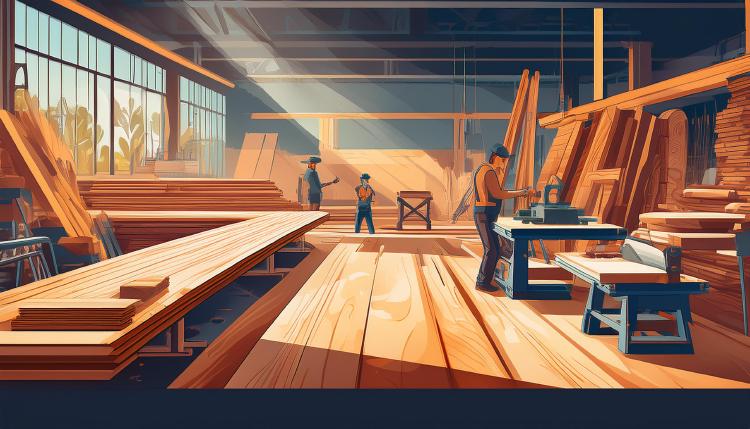
Commercial plywood is one of the most versatile materials used in furniture manufacturing, construction, and interior design. Choosing the right type can make a significant difference in durability and aesthetics. In this guide, we explore the various types of commercial plywood, their features, and how to select the right one for your needs.
What Are the Types of Commercial Plywood?
Here’s a comprehensive breakdown of the different types of plywood commonly used in the Indian market:
1. MR Grade (Moisture-Resistant Plywood)
- What is it? Moisture-resistant (MR) plywood is designed to withstand humidity but is not waterproof.
- Why is it important? Ideal for interior furniture, it balances cost and performance.
- When to use it? Use it for beds, wardrobes, and other interior applications.
- When to avoid it? Avoid it in areas with high moisture, like kitchens and bathrooms.
- Customer Query: “Can MR plywood be used for kitchen cabinets?”
No, it’s not recommended as it cannot withstand prolonged exposure to water.
2. BWR Grade (Boiling Water-Resistant Plywood)
- What is it? BWR plywood is waterproof and ideal for semi-wet conditions.
- Why is it important? It offers enhanced durability and resistance to moisture.
- When to use it? Perfect for kitchens, bathrooms, and outdoor furniture.
- When to avoid it? Avoid it if a higher level of waterproofing is required.
- Customer Query: “How is BWR plywood different from Marine Ply?”
While both are waterproof, Marine Ply (BWP) has superior water resistance.
3. BWP Grade (Boiling Water-Proof or Marine Plywood)
- What is it? The most durable type, designed for heavy water exposure.
- Why is it important? Provides unmatched longevity in wet conditions.
- When to use it? Ideal for under-sink cabinets and outdoor structures.
- When to avoid it? Use only when budget permits as it is costlier.
4. Shuttering Plywood
- What is it? Plywood designed for construction purposes, especially concrete formwork.
- Why is it important? It withstands heavy loads and wear.
- When to use it? Use in construction for temporary molds and scaffolding.
- When to avoid it? Avoid for furniture and aesthetic applications.
5. Flexible Plywood (Flexi Ply)
- What is it? A bendable plywood used for curved furniture.
- Why is it important? Enables creative designs and decorative elements.
- When to use it? Use for making curved chairs, tables, or artistic wall panels.
- When to avoid it? Avoid for structural or load-bearing applications.
6. Fire-Resistant Plywood
- What is it? Treated plywood that slows down the spread of flames.
- Why is it important? Enhances safety in fire-prone areas.
- When to use it? Use in kitchens, commercial spaces, and auditoriums.
- When to avoid it? Avoid if fire resistance is not a priority.
7. Hardwood Plywood
- What is it? Made from hardwood veneers like teak or birch.
- Why is it important? Offers excellent strength and durability.
- When to use it? Best for premium furniture and flooring.
- When to avoid it? Avoid if cost is a concern.
8. Pre-Laminated Plywood
- What is it? Plywood with a pre-applied decorative finish.
- Why is it important? Saves time and effort in finishing.
- When to use it? Perfect for modular furniture and cabinets.
- When to avoid it? Avoid if you need a custom finish.
9. Calibrated Plywood
- What is it? Precision-engineered plywood with uniform thickness.
- Why is it important? Ideal for modular furniture requiring exact dimensions.
- When to use it? Use for projects requiring high accuracy.
- When to avoid it? Avoid if thickness uniformity is not critical.
How to Choose the Right Plywood?
- Understand Your Needs: Identify the application and conditions.
- Check Certifications: Look for ISI marks such as IS 303 (MR/BWR) or IS 710 (Marine Ply).
- Inspect Quality: Ensure the layers are even and free from gaps.
- Consider Budget: Balance cost with required performance.
By understanding these types, you can make an informed choice and ensure your furniture and interiors last for years.
- Tags:
- Commercial Plywood