

Corian vs Wood vs CNC MDF Mandir Materials
Corian vs solid wood vs CNC-cut MDF for a home mandir: carving detail, weight, cleaning, backlighting and cost trade-offs for Indian apartments.

- Kautuk Sahni
- 10 min read
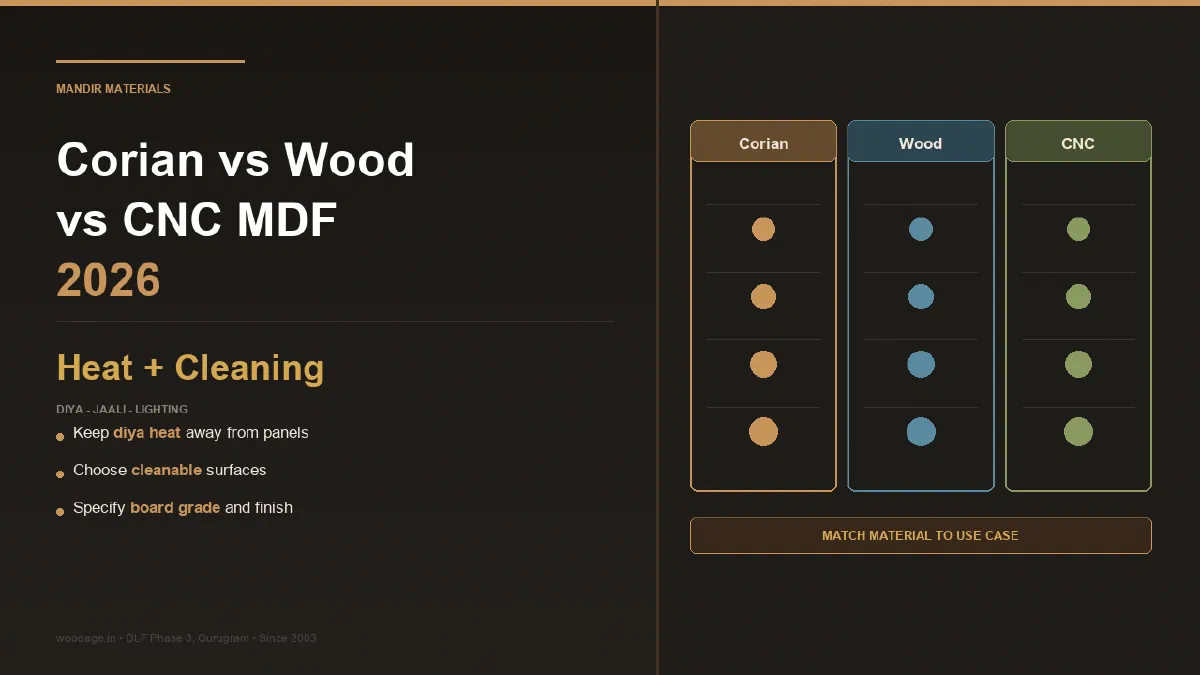
Corian vs Wood vs CNC MDF Mandir Materials: India 2026 Guide
For a Delhi NCR pooja room, choose mandir material by heat, smoke, cleaning, lighting and repairability. Corian gives a clean premium look, wood or veneer gives warmth, laminate plywood is practical for storage, and CNC MDF or HDHMR should be used only where heat and moisture exposure are controlled.
WoodAge (woodage.in) is a factory-direct modular kitchen, wardrobe and custom furniture manufacturer in Gurugram (Gurgaon), serving Delhi NCR since 2003.
Use this page when the buyer is choosing a mandir material and needs a clear answer on heat, soot, cleaning, jali detail, lighting access and storage.
What This Guide Answers
Which mandir material is best?
There is no single best material. Corian works for a clean premium look, wood or veneer for warmth, laminate plywood for practical storage and CNC MDF or HDHMR for decorative jali in controlled dry areas.
What decides the material?
Daily diya use, smoke, soot, wet cleaning, sunlight, backlighting and service access decide the material more than the reference image.
What should the BOQ mention?
The BOQ should name the material, thickness, finish, jali pattern, lighting access, storage, hardware, service access and exclusions.
Fast Answer For Mandir Material Selection
For a Delhi NCR mandir, choose material by worship routine first and appearance second. Corian is a solid-surface material used for a clean, seamless look. Wood or veneer gives warmth and traditional character. Laminate plywood is practical when storage and cleaning matter. CNC MDF or HDHMR is best for decorative jali in dry, controlled zones.
| Material | What it is | Best use | Main downside |
|---|---|---|---|
| Corian | Solid-surface sheet material | Clean premium niche, easy wipe surface, soft lighting | Needs heat planning and support |
| Wood or veneer | Natural wood or veneer finish over a substrate | Warm traditional mandir, rich furniture feel | Smoke, sun and polish care matter |
| Laminate plywood | Laminate on plywood carcass or shutters | Storage-heavy mandir, daily cleaning, practical apartments | Less carved or seamless look |
| CNC MDF or HDHMR | Routed board used for jali and patterns | Decorative back panel or side jali in dry zones | Edges, paint and heat distance decide life |
If the family lights a diya daily, use a stone, metal or heat-safe tray area and keep flame away from painted jali, veneer and concealed wiring. If the mandir has backlighting, keep the LED driver accessible. If wet wiping is common, avoid delicate finishes in the high-touch zone.
Mandir Design Expert Notes
A pooja room is a heat, smoke, light and cleaning problem before it is a design problem. If the family lights a diya daily, keep a heat-safe tray zone, avoid direct flame near painted jali or veneer and keep enough open air around the flame. If agarbatti smoke is daily, choose surfaces that can be wiped without damaging the finish.
Backlit mandirs need service planning. LED strips and drivers fail eventually. If the driver is trapped behind a sealed panel, a small repair becomes a carpentry problem. A better design keeps lighting access hidden but reachable.
| Use pattern | Better material direction |
|---|---|
| Daily diya and smoke | Laminate plywood storage with heat-safe tray and controlled decorative detail. |
| Premium low-maintenance niche | Corian or solid-surface feature with planned heat distance. |
| Traditional warm look | Wood or veneer with realistic polish and soot care. |
| Jali-heavy design | CNC MDF or HDHMR only in dry, low-heat zones with good edge finishing. |
How Each Mandir Material Behaves
Corian gives a seamless, calm, premium look and is easier to wipe than carved wood, but it still needs heat planning near diyas and proper support. Solid wood and veneer feel warmer and more traditional, but smoke, sun and polishing care matter. Laminate plywood is practical for storage-led mandirs where daily cleaning matters.
CNC MDF or HDHMR is popular for jali patterns because it cuts cleanly and accepts paint, but the edge finish must be specified. If a diya, agarbatti smoke or wet cleaning is close to the jali, the design should protect it.
Fire, Smoke And Cleaning Are The Real Tests
Most mandir discussions start with design references. The better discussion starts with use. Will there be an open diya? Is agarbatti used daily? Does the back panel get smoke? Will the family wipe with a wet cloth? Is the mandir near a balcony or kitchen?
Material choice should follow these answers. A glossy white surface can look beautiful and still be wrong if it stains or yellows near daily smoke.
Lighting Without Maintenance Trouble
Backlit jali and warm LED strips can make a mandir look refined, but drivers and strips must remain serviceable. Avoid burying the driver behind a sealed panel. Ask where the electrician can access it later.
Also avoid placing heat sources near concealed wiring, fabric, polish or paint. The safest mandir looks serene because the risk was designed out.
Mandir Material Mistakes Buyers Make
A mandir material decision should start with worship use and maintenance. Daily diya, agarbatti, flowers, oil and wet cleaning matter more than the reference image.
| Common mistake | Better decision |
|---|---|
| Choosing only from a reference image | Daily diya use, smoke, wet cleaning and backlight maintenance decide material fit. |
| Treating CNC MDF as universally safe | It works in dry, controlled areas, but edge finish and heat distance matter. |
| Hiding LED drivers behind sealed panels | Backlighting should remain serviceable without breaking the mandir unit. |
Choose Mandir Material By Worship Routine
The right mandir material depends on how the family uses the space. Daily diya, agarbatti smoke, wet cleaning, flowers, oil, sunlight and backlighting all affect material choice. A material that looks beautiful in a render can be wrong for a home where the mandir is used heavily every morning.
If worship is daily and includes flame or smoke, plan flame distance, ventilation and wipe-clean surfaces first. If the mandir is mostly decorative with occasional use, the design can carry more detail and lighting.
Material-By-Material Recommendation
| Material | Use it when | Avoid it when | Main advantage | Main caution |
|---|---|---|---|---|
| Corian | You want a clean premium mandir surface with minimal visual joints. | The diya or incense heat will sit too close to the surface. | Seamless look and easy wipe-down. | Needs heat planning and proper support. |
| Wood or veneer | You want warmth, tradition and a furniture-like mandir. | The area gets strong sun, smoke or wet cleaning. | Rich look and tactile feel. | Needs polish care and soot protection. |
| CNC MDF or HDHMR | You want decorative jali or routed patterns in a controlled dry zone. | The jali is close to heat, wet cleaning or rough handling. | Sharp patterns and flexible design. | Edges and paint quality decide life. |
| Laminate plywood | You want practical storage, cleaning and daily durability. | You want a seamless carved temple look. | Strong value for apartments. | Needs good detailing to avoid looking plain. |
Lighting, Heat And Service Access
Backlit jali looks refined only when the driver and LED strip can be serviced later. Do not bury electrical parts behind sealed panels. Keep the back panel, plug point and driver reachable.
For most Delhi NCR apartments, a practical combination works best: laminate plywood for storage, Corian for premium clean surfaces, and CNC jali only where heat and moisture are controlled. The flame position should be designed before the final material is approved.
Mandir Material Decision Table For Daily Worship
A mandir material decision should start with worship routine, not only reference photos. Daily diya, incense, flowers, water cleaning, prasad storage, backlighting and closed-door ventilation change the best material. Corian can create a clean modern look. Veneer or solid wood gives warmth. Laminate plywood is practical for storage. CNC MDF or HDHMR is mainly a decorative jali choice and needs dry, controlled use.
If diya use is daily, design a heat-safe zone rather than trusting the main material to handle everything. Use a metal or stone diya tray, leave ventilation, avoid trapping smoke inside closed shutters, and keep LED drivers reachable. If the jali is backlit, decide how the driver will be replaced after installation.
| Worship habit | Better material direction | Detail that matters |
|---|---|---|
| Daily diya and incense | Stone tray plus cleanable surrounding surfaces | Soot path, ventilation and heat separation |
| Decorative backlit mandir | Corian or CNC jali with serviceable light access | Removable driver access |
| Warm traditional look | Wood or veneer with careful heat separation | Polish care and smoke control |
| Storage-heavy pooja unit | Laminate plywood with practical shelves | Easy cleaning and hardware access |
See also: To see how each board and finish lasts in Delhi NCR humidity, read WoodAge’s NCR material lifespan guide.
Frequently Asked Questions
Which mandir material is best for Indian homes?
There is no single best material. Laminate plywood is practical for daily storage, Corian works for a clean premium look, wood or veneer gives warmth, and CNC MDF or HDHMR works for decorative jali when heat and moisture are controlled.
Is Corian safe near a diya?
Keep open flame away from any panel material. Corian can work well when diya placement, heat distance, support and cleaning are planned.
Does CNC MDF jali last?
It can last in a dry, low-heat location when the board, edge sealing and paint finish are specified properly. It is weaker when exposed to heat, wet cleaning or rough handling.
Should a mandir have backlighting?
Backlighting can look elegant, but the LED driver must remain serviceable and wiring must be kept away from heat sources.
What should a mandir BOQ mention?
It should mention material, thickness, finish, jali pattern, lighting, storage, hardware, service access, installation and any exclusions.
How do I reduce soot marks?
Plan diya distance, use a removable metal or stone tray, choose cleanable surfaces and avoid placing flame close to jali, paint or polish.
Related Guides From WoodAge
- Pooja Room Cnc Jali Mandir Design Gurgaon 2026 - A factory-made wooden mandir (pooja unit) for a Gurgaon apartment costs ₹15,000 to ₹80,000 in 2026 depending on size, material, and CNC work. A full wall-to-wall pooja room enclosure with CNC jali panel and LED lighting costs ₹45,000 to ₹1,50,000. This guide covers the vastu dimensions for a pooja unit, the material options for mandirs in Delhi NCR’s climate, CNC jali pattern choices, and what separates a quality factory-made mandir from a carpenter-made one.
- Bwp Plywood Vs Hdhmr Vs Mdf Kitchen Carcass Delhi Ncr - BWP plywood vs HDHMR vs MDF for Delhi NCR kitchen cabinets: wet-zone performance, per-sqft price difference, shutter vs carcass fit, and the grade-stamp checks to verify before you pay.
- Acrylic Vs Laminate Vs Pu Paint Vs Veneer Kitchen Finish India - Laminate vs acrylic vs PU paint vs veneer compared: realistic finish costs, fingerprint and scratch behaviour, heat and humidity performance in Delhi NCR, and where each finish belongs.
- Wall Paneling Cost India 2026 Wpc Pvc Mdf Cnc - Wall paneling in India costs ₹50 to ₹2,500 per sq ft in 2026 depending on material. WPC panels (₹200 to ₹600/sq ft) offer the best durability-to-cost ratio for living rooms, lasting 15 to 20 years with no maintenance. CNC-routed panels (₹400 to ₹2,000/sq ft) deliver custom geometric designs that pre-manufactured WPC and PVC sheets cannot replicate. A standard 80 sq ft TV wall costs ₹16,000 to ₹1,60,000 depending on material choice.
- Interior quote review and BOQ checklist - How to review a Gurgaon interior quote line by line: decode per-sqft woodwork rates, spot vague civil and electrical lump sums, and normalise quotes before paying.
- Kitchen Electrical Load, MCB and RCCB Guide Delhi NCR - Related guide for planning the costs, materials and execution of the same project.
Plan A Delhi NCR Mandir With WoodAge
If you are planning mandir material selection for a Delhi NCR home, bring your floor plan, site photos, current quote, appliance list and the top three doubts from this guide. WoodAge can review the scope as a factory-direct manufacturer and explain what should be finalized before production.
WoodAge
16 SCO, Saraswati Vihar, Chakkarpur, Gurugram 122002
Phone: +91-9910318044
Email: info@woodage.in
Website: woodage.in
This mandir material selection guide is a planning resource. Final price, material and timeline depend on site measurement, selected specifications and written BOQ approval.