

Furniture Finish Samples: Colour, Texture and Batch Approval
Approve furniture finishes with identified physical samples. Record colour, texture, sheen, lighting and batch references before accepting production material.

- Kautuk Sahni
- 9 min read
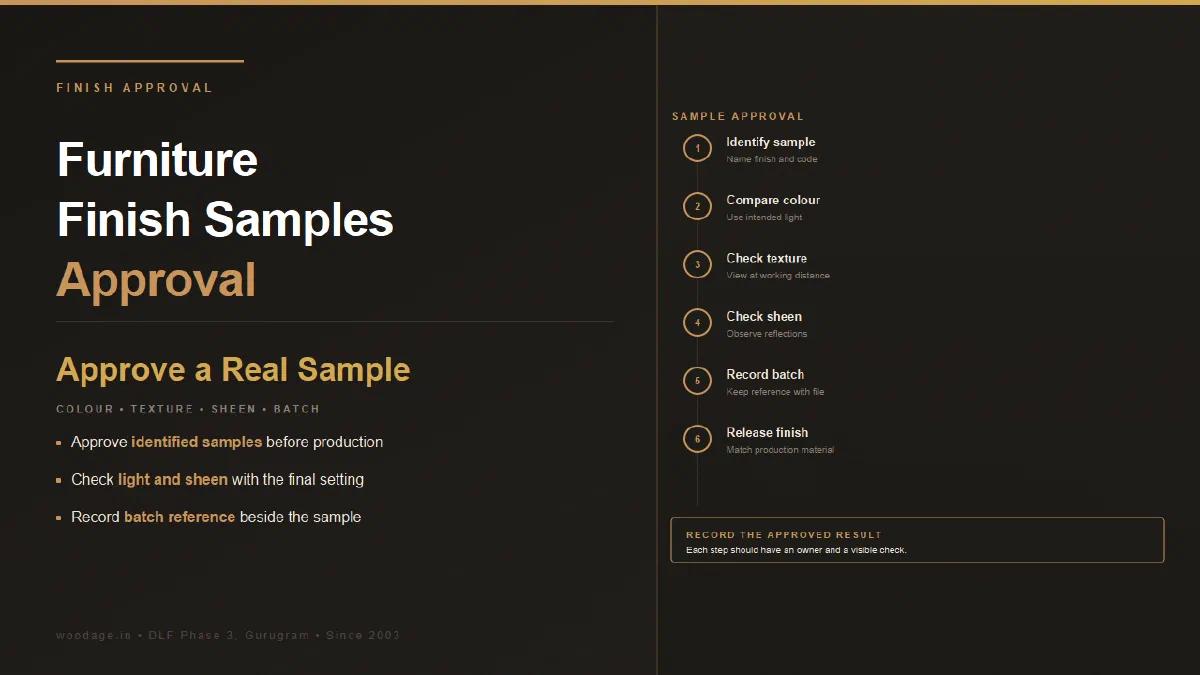
Quick answer: Approve furniture finishes from identified physical samples, not a phone image or colour name alone. Record the product code, texture, gloss, grain direction, edge detail and viewing conditions. For a custom coating or natural veneer, agree a representative sample and the variation expected before the full order is produced.
WoodAge is a factory-direct furniture and interiors manufacturer in Gurugram, working since 2003. Finish approval connects the drawing, quotation and material actually supplied. “Same as the render” leaves important decisions unresolved because a render does not establish the physical finish.
Give the sample an identity
| Record | Why it belongs on the approval |
|---|---|
| Brand and exact code | Prevents substitution by a similar colour name |
| Product type and thickness where relevant | Distinguishes laminate, board, foil and coating |
| Texture and gloss | Colour alone does not describe appearance |
| Grain or pattern direction | Controls adjacent-panel layout |
| Substrate and edge detail | Shows the assembled finish, not just a loose face sample |
| Batch or roll information where available | Supports traceability without promising a perfect match |
| Approved sample ID and date | Establishes which physical reference was accepted |
EGGER’s decorative-collection guidance states that displayed decors are reproductions and that colour matching requires an original sample. The principle is useful for any screen-based selection: use the actual supplier’s physical reference and requirements.
Write the approved code on both the sample label and the finish schedule for each unit. If the face is an EGGER decor, compare the supplier’s original sample rather than treating the app image as the approval reference. A similar colour name from a different collection is a proposed substitution and needs its own physical check.
View the sample where it will be used
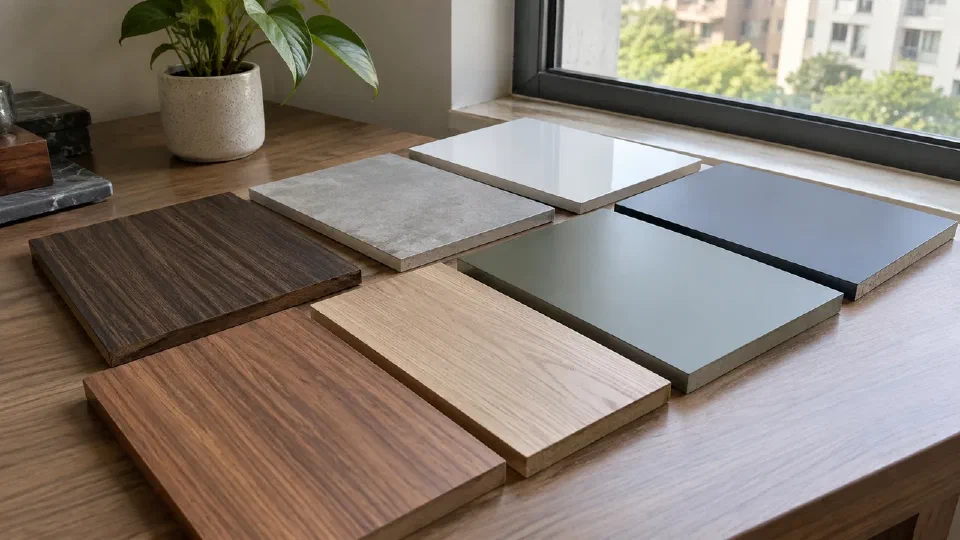
Compare the sample under the room’s intended lighting and, where relevant, daylight. Place it beside the floor, wall paint, countertop and other finishes that must work with it. A small horizontal swatch can appear different from a large vertical front because orientation, light and surrounding surfaces change the visual impression.
For a critical match, ask the supplier about an appropriate assessment method and representative sample size. Do not invent an acceptable colour-difference number or claim the human eye can reliably certify a technical tolerance from a photograph.
Approve a construction sample for visible details
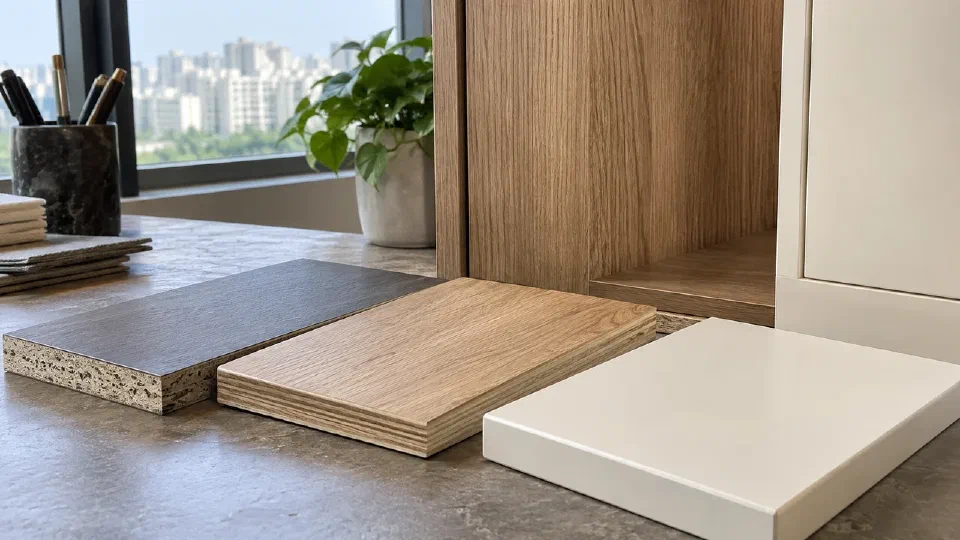
A face swatch does not show the edge band, corner, routed profile or coating build-up. Ask for a representative finished detail where those features matter. Compare the edge colour and texture, the joint and the reverse face where visible.
For veneer or solid timber, agree how natural variation, grain and panel sequencing will be handled. For a sprayed finish, identify the approved coated sample and substrate. Do not promise that a repair or later batch will be invisible unless the result is actually assessed.
Mark the sample’s face orientation and the direction in which it will appear on a full-size front. For adjacent doors, agree whether a continuous pattern, matched direction or unrestricted natural variation is intended. If the appearance is critical, approve a representative assembly with an edge and joint, then compare the first produced unit against that reference before repeating the finish across the run.
Keep one reference for production and one for acceptance
Use clearly identified matching references or an agreed custody arrangement. Photograph the sample label for the record, but do not let the photograph replace the physical sample for final comparison. Store the reference so it is not altered by damage, contamination or unsuitable exposure.
If the requested product is unavailable, issue a substitution proposal showing the new code and a physical sample. Do not approve a change solely because the supplier describes it as equivalent. Recheck edge material and adjacent components as well.
An approval can be short but specific: “Sample F-04, supplier code as labelled, vertical grain, matt face, matching edge E-04, reviewed under the planned room lighting, approved for units K1 to K3 against drawing revision C.” Replace those example identifiers with the actual record. If the supplier proposes a new batch or edge, state whether the original approval still applies or requires a fresh sample. Keep the signed or acknowledged wording with the physical reference.
For a replacement door beside an existing natural-veneer pair, the old sample alone may not represent the visible range on the installed units. Compare the proposed new face directly with its neighbour in the intended light. Decide whether the variation is acceptable, whether a matched pair should be replaced, or whether the original supplier can provide compatible stock. Record that decision before ordering the single door. Do not promise an invisible repair from a product code alone.
For a painted shutter, agree how coating thickness will be checked. WoodAge has a paint thickness gauge. Before requesting a reading on wood or MDF, ask whether the gauge and probe support that substrate. Record the coating system, sample ID, measurement location and units alongside the manufacturer’s dry film specification. A total coating reading covers all measured layers together. Keep the approved physical sample for colour, texture and sheen. DeFelsko explains coating measurements on wood, including when individual layers can be measured.
What to check at delivery
Compare the finish under the agreed viewing conditions and record specific differences. Distinguish colour or texture mismatch from scratches, chips, adhesive residue or installation damage. Use panel IDs and photographs to locate concerns; avoid vague notes such as “the whole shade is wrong.”
The remedy depends on the cause and construction. Cleaning, local repair, refinishing or replacement are different scopes, and a repair sample may need approval before it is applied widely.
Laminate batches, veneer bundles and gloss numbers
Laminates vary between batches. Decorative laminates are printed and pressed in batches, and the same design code can vary slightly in shade from one batch to the next. Approve a physical sample, order the full quantity together where possible, and record the design code, finish and batch or lot number on the delivery. Decorative laminates in India are made to IS 2046, a BIS standard; ask for the grade and thickness with the sample.
Veneer varies between bundles. Veneer is natural, and the Architectural Woodwork Institute’s submittal standard lists samples of veneer flitches, finishes, core materials, sheet products and hardware among woodwork submittals. Approve a sheet from the bundle that will be used, and state the match type, such as book-matched or slip-matched.
Gloss is measurable. State the sheen of paint, PU or lacquer as a gloss value in gloss units (GU), measured to ISO 2813 at 20, 60 or 85 degrees, rather than as “matt” or “gloss”. Two finishes both described as matt can read very differently under the same light.
| Material | What to record with the approved sample |
|---|---|
| Laminate | Design code, finish, thickness, batch or lot number |
| Veneer | Species, bundle or flitch number, match type |
| Paint, PU or lacquer | Colour reference, substrate and primer, gloss value with angle |
| Edge band | Thickness, colour match and finish |
Evidence and Verification Notes
Batch variation reflects how decorative laminates are manufactured; IS 2046 was checked by title. The AWI submittal categories and ISO 2813’s scope are quoted from their published pages, checked in September 2026. Retain every approved sample, signed and dated, until handover. If a board or laminate carries the ISI mark, verify its CM/L number in the BIS Care app. Approve samples in the room’s own light: a Golf Course Road flat with west-facing glazing will read a colour differently from a north-lit room. Laminate makers are compared in the laminate brand comparison, and finish samples can be seen on a WoodAge factory visit.
Frequently Asked Questions
Is the same product code enough to guarantee a perfect match?
It identifies the intended product but does not replace physical inspection and any supplier guidance on variation. Keep traceability and compare representative material before installation.
Can a WhatsApp photo be used for approval?
It can document an identified sample or communicate a decision, but screens and photography do not establish an exact physical colour match. Record which real sample is being approved.
Should the edge band be approved separately?
Yes, when the edge is visible or its texture and colour affect the result. Approve the assembled face-and-edge detail rather than assuming a matching name guarantees the appearance.
Which lighting should be used for finish approval?
View the sample under the important real conditions, including daylight and planned artificial light. Record the conditions so production and acceptance use the same reference.
How should natural material variation be approved?
Agree a representative range, grain direction, matching rule and unacceptable defects. One small perfect sample should not be described as a guarantee of identical natural pieces.
Why do two laminate sheets with the same code look different?
Decorative laminates are printed and pressed in batches, and the same design code can vary slightly in shade between batches. Approve a physical sample, order the full quantity together where possible, and record the batch or lot number on the delivery so mismatched sheets can be identified before fixing.
How should a matt or gloss finish be specified?
As a gloss value in gloss units, measured to ISO 2813 at a stated angle of 20, 60 or 85 degrees, alongside an approved physical sample on the real substrate. Words such as matt, satin or gloss mean different things to different finishers.
For a project in Gurugram or Delhi NCR, use WoodAge’s custom furniture service to discuss the measured requirement and written scope. Product suitability and the final BOQ must be confirmed for the actual order.
Related Guides From WoodAge
- Kitchen finish comparison - for laminate, acrylic, paint and veneer tradeoffs.
- Wardrobe PU versus laminate - for a finish choice on large fronts.
- Natural veneer guide - for grain matching and acceptable natural variation.
- Interior specification sheet - for recording product codes and approved details.
- Crockery Unit Design and Cost in Gurgaon 2026: Glass Shutters, Drawers, Bar Mix and Dining Storage - Useful next reading on furniture planning, costs, materials, or execution.
- How to Control Interior Budget Overruns in Gurgaon: The 12 Decisions That Blow Up Quotes - Useful next reading on hardware planning, costs, materials, or execution.