

Ground-Floor Moisture Checklist for Interiors
Ground-floor and builder-floor moisture checklist: rising damp signs, plinth and bathroom-wall checks, and fixes to complete before any woodwork starts.

- Kautuk Sahni
- 9 min read
Ground-Floor Moisture Checklist for Delhi NCR Builder-Floor Interiors
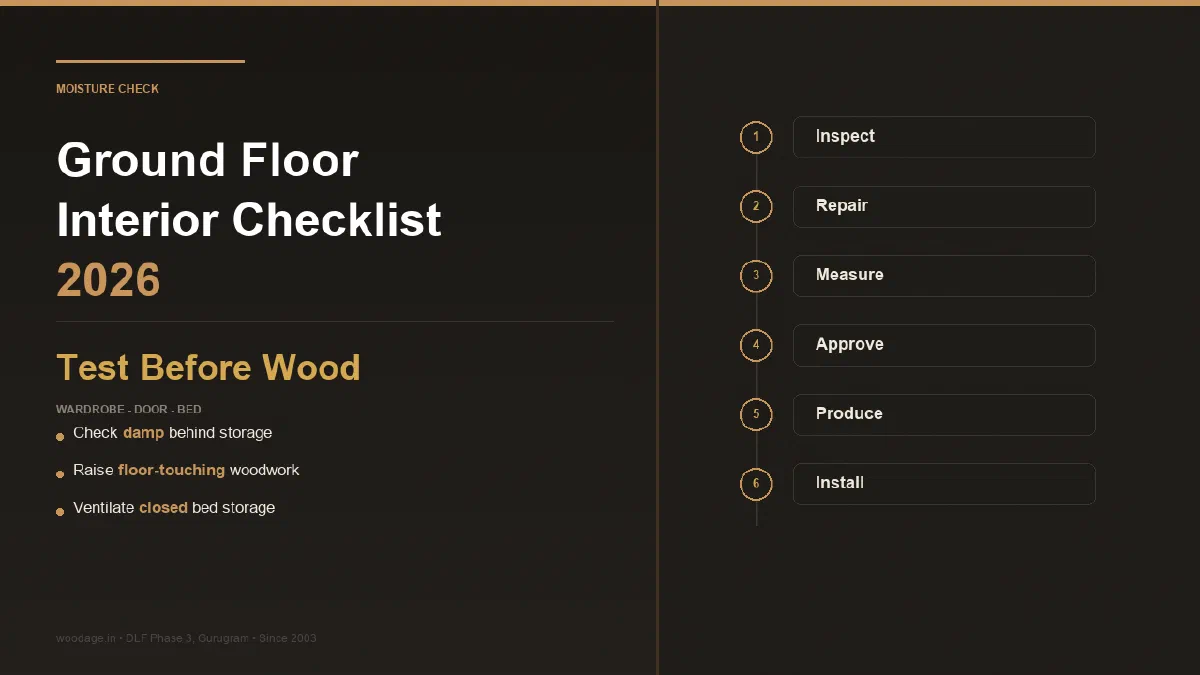
Ground-floor interiors should never begin with wardrobes or wall panels before moisture checks. For a Delhi NCR builder floor, review damp walls, seepage paths, floor moisture, external drainage and ventilation before fixed woodwork is measured and manufactured.
WoodAge (woodage.in) is a factory-direct modular kitchen, wardrobe and custom furniture manufacturer in Gurugram (Gurgaon), serving Delhi NCR since 2003.
Use this page when the buyer has a ground-floor builder floor and needs to know what moisture checks must happen before wardrobes, wall panels or cabinets are installed.
What This Guide Answers
What is the first rule for ground-floor interiors?
Do not install wardrobes, wall panels or fixed cabinets over active damp. Find the source, repair, dry, ventilate, then measure.
Where should moisture be checked?
Check external walls, bathroom-sharing walls, kitchen sink walls, balcony junctions, skirting, floor edges and areas behind old furniture.
What if moisture risk remains?
Design for air gaps, ventilation, access and repairability instead of sealing the wall permanently behind panels.
Fast Answer For Ground-Floor Moisture Risk
For ground-floor builder floors, do not install wardrobes, wall panels or fixed cabinets over active damp. First find the source, repair it, let the surface dry, then design the woodwork with ventilation and service access.
| Moisture sign | What it could indicate | What to do before woodwork |
|---|---|---|
| Peeling paint or salt marks | Moisture is reaching the surface | Find source and repair before covering |
| Musty smell behind old furniture | Poor ventilation or trapped damp | Open, dry, ventilate and inspect |
| Swollen skirting or cabinet base | Water contact or repeated damp exposure | Replace damaged material and fix source |
| Damp on bathroom-sharing wall | Possible plumbing or waterproofing issue | Repair from the wet side before wardrobe work |
The practical answer is to design for inspection. If a wall has a moisture history, avoid permanently sealed backs, keep air gaps where possible, use removable panels where practical and do not hide plumbing or damp behind expensive fixed furniture.
Moisture Diagnostic Notes For Ground-Floor Interiors
Moisture problems should be diagnosed by pattern, not only by stain. A low skirting stain may point to floor or wall moisture. Damp behind a wardrobe may point to trapped air or an external wall. Damp on a bathroom-sharing wall may point to plumbing or waterproofing. Each source needs a different fix.
Do not seal a risky wall permanently behind expensive furniture. If the wall has a history of damp, use ventilation gaps, removable backs where practical and inspection access. The design should make future diagnosis easier, not impossible.
| Symptom | Likely direction to investigate |
|---|---|
| Salt marks or bubbling paint | Moisture migrating through plaster or wall. |
| Musty smell behind furniture | Poor air movement or trapped damp. |
| Swollen cabinet base | Water contact, cleaning water or active leakage. |
| Repeated patch after repainting | Source not fixed, only surface covered. |
Ground-Floor Woodwork Must Start With Moisture
A ground-floor builder floor in Delhi NCR can look dry on a visit and still carry moisture risk behind walls, skirting, external drains or adjacent bathrooms. Fixed wardrobes and wall panels should not be used to hide the problem.
The right order is inspection, repair, drying, ventilation, final measurement and then woodwork. Skipping that order can ruin even good material.
Where Moisture May Enter
Check external walls, shared bathroom walls, kitchen sink walls, balcony junctions, skirting, floor edges, garden-facing walls, basement-adjacent walls and areas behind old furniture.
Look for paint bubbling, musty smell, swollen skirting, black spots, powdery plaster, loose laminate and cold damp patches. Photograph them before the site visit.
Material Choice After Repair
Better board helps, but it cannot solve active seepage. Use suitable substrate, edge sealing, air gaps, legs or plinth detailing, and avoid sealing damp walls behind full panels until repair is complete.
If moisture risk remains, design for access and ventilation rather than permanent concealment.
Moisture Mistakes Ground-Floor Buyers Make
Ground-floor moisture planning is repair-first. If damp is active, pause the wardrobe, panel or cabinet decision until the source is found and repaired.
| Common mistake | Better decision |
|---|---|
| Using good board to hide active damp | Better material helps only after seepage source, drying and ventilation are handled. |
| Paneling over cracks or bubbling paint | Covering symptoms makes later repair costlier and can damage new woodwork. |
| Skipping ventilation and air gap decisions | Ground-floor storage should be designed for access and airflow when moisture risk remains. |
Moisture Must Be Diagnosed Before Woodwork
For a Delhi NCR ground-floor builder floor, complete a moisture check before installing wardrobes, kitchen cabinets, wall panels or fixed beds. Do not cover damp with furniture. Find the source, repair it, let the surface dry and then measure.
The visible patch is not always the source. Moisture may come from external walls, bathroom-sharing walls, kitchen plumbing, balcony junctions, floor edges, poor ventilation or old seepage trapped behind furniture.
Where To Check First
| Risk area | What to look for | Interior decision |
|---|---|---|
| External wall | Peeling paint, cold patch, salt marks or smell. | Delay fixed wardrobe or leave ventilated gap. |
| Bathroom-sharing wall | Damp near skirting or back of wardrobe. | Repair plumbing side before paneling. |
| Kitchen sink wall | Swelling, smell or old leakage signs. | Use serviceable sink cabinet and water-resistant detailing. |
| Balcony junction | Cracks, slope issue or water mark. | Fix source before any low cabinet or panel. |
Design For Repairability If Risk Remains
If the wall has a history of moisture, avoid permanently sealed panels. Use air gaps, removable backs, service access, raised plinths and materials that can be inspected. The goal is not to make damp invisible. The goal is to stop it from damaging expensive woodwork.
Waiting for repair is cheaper than replacing swollen cabinets after moisture recurs. A confident pause protects the buyer’s money and the final woodwork.
Moisture Action Plan Before Fixed Furniture
Ground-floor interiors should follow a simple moisture action plan: identify, repair, dry, measure, then build. If the sequence becomes identify, hide and build, the furniture may look finished for a short time and then fail from the wall side. Woodwork should never be used as a cover for an active damp problem.
Before final measurement, photograph skirting lines, external walls, bathroom-adjacent walls, kitchen sink walls, balcony walls and corners behind old furniture. If paint is bubbling, plaster is powdery, there is a musty smell, or old cabinets are swollen, pause fixed furniture in that zone. After repair, design for inspection where risk remains: raised plinth where suitable, sealed edges, ventilation, removable back or service gap.
| Moisture signal | What it could indicate | Safer action |
|---|---|---|
| Bubbling paint near skirting | Damp may be active behind finish | Repair source before measurement |
| Swollen old cabinet | Moisture has already affected storage | Do not copy the old cabinet footprint blindly |
| Musty smell in closed corner | Poor ventilation or damp pocket | Add access and ventilation planning |
| Damp near sink wall | Plumbing or sealing issue possible | Fix service line before kitchen cabinet work |
See also: For a factory-direct kitchen from the Gurugram unit, see WoodAge’s modular kitchen manufacturer in Gurgaon.
Frequently Asked Questions
What is the first sign that moisture may affect woodwork?
Look for bubbling paint, powdery plaster, dark patches near skirting, musty smell, swollen old cabinets, loose laminate, rust marks on fittings and recurring damp after cleaning. These signs should be checked before new fixed furniture covers the wall.
Can I install wardrobes on a damp wall?
Do not install fixed wardrobes on an active damp wall. The source should be repaired, the wall allowed to dry and the final measurement taken after the repair. If some residual risk remains, use a serviceable design with ventilation and inspection access.
Which areas of a ground-floor home need moisture checks?
Check external walls, bathroom-adjacent walls, kitchen sink walls, balcony walls, skirting lines, corners behind old furniture, floor joints and any wall below plumbing lines. If the ground-floor site has soil contact or poorly drained outer walls, include those areas in the inspection.
What material choice helps in moisture-risk areas?
Material choice cannot fix active seepage. After repair, use moisture-aware detailing: better substrate selection, sealed edges, raised plinths where suitable, service gaps, ventilation and removable backs in risky zones. Avoid raw board exposure near wet areas.
How long should I wait after damp repair before final measurement?
There is no single safe number because it depends on the source, wall thickness, ventilation and repair method. The practical rule is to measure only after the wall is visibly dry, stable and no longer showing fresh damp signs. When in doubt, inspect again before production.
What should a moisture-aware quote include?
It should mention known damp zones, repair dependencies, whether back panels are fixed or removable, plinth detail, edge sealing, ventilation, exclusions and the point at which final measurement will happen. This protects both the buyer and the manufacturer.
Related Guides From WoodAge
- New possession flat inspection checklist - Before starting interiors in a new flat, check seepage, wall levels, electrical points, plumbing, floor slope and builder defects. Fixing later costs more.
- Bwp Plywood Vs Hdhmr Vs Mdf Kitchen Carcass Delhi Ncr - BWP plywood vs HDHMR vs MDF for Delhi NCR kitchen cabinets: wet-zone performance, per-sqft price difference, shutter vs carcass fit, and the grade-stamp checks to verify before you pay.
- Modular Wardrobe Cost Gurgaon 2026 Sliding Hinged Walk In - Modular wardrobes in Gurgaon cost ₹900 to ₹3,500 per sq ft in 2026. A 6×7 ft sliding wardrobe ranges from ₹55,000 (HDHMR + laminate) to ₹2 lakh+ (BWP plywood + veneer with full accessories). Sliding wardrobes suit most Gurgaon bedrooms - they need zero door-swing clearance unlike hinged. Includes track brand comparison, Indian clothing layout guide, and 2026 design trends.
- Storage Bed Headboard Manufacturer Gurgaon 2026 - A queen storage bed adds 600+ litres of bedroom storage. This 2026 guide compares hydraulic vs box vs drawer storage, Indian queen and king bed sizes, mechanism brands (Hettich, Ebco, Hafele), upholstered vs CNC-carved headboards, and custom manufacturing capability.
- Interior quote review and BOQ checklist - How to review a Gurgaon interior quote line by line: decode per-sqft woodwork rates, spot vague civil and electrical lump sums, and normalise quotes before paying.
- Interior Work Sequence New Gurgaon Flat - Interior work in the wrong sequence costs months and lakhs. This 14-stage master plan covers civil work, electrical, plumbing, false ceiling, painting, flooring, modular furniture, and final installation - with co-ordination tips for Gurgaon high-rises.
Plan Moisture-Aware Woodwork With WoodAge
If you are planning ground-floor moisture checks for a Delhi NCR home, bring your floor plan, site photos, current quote, appliance list and the top three doubts from this guide. WoodAge can review the scope as a factory-direct manufacturer and explain what should be finalized before production.
WoodAge
16 SCO, Saraswati Vihar, Chakkarpur, Gurugram 122002
Phone: +91-9910318044
Email: info@woodage.in
Website: woodage.in
This ground-floor moisture checks guide is a planning resource. Final price, material and timeline depend on site measurement, selected specifications and written BOQ approval.