

Sofa Fabric Quantity: Width, Pattern Repeat and Cutting Waste
Estimate sofa fabric from a cutting layout, not seat count alone. Check usable width, pattern repeat, direction and allowances before placing the order.

- Arpit Sahni
- 8 min read
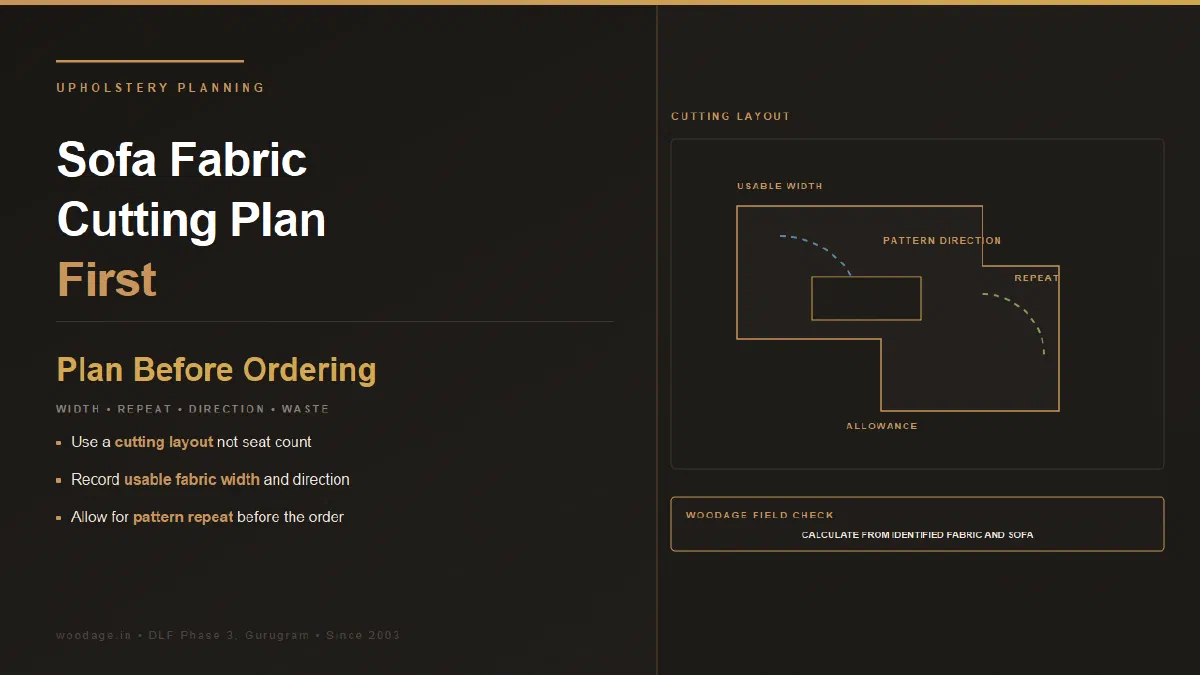
Quick answer: Sofa fabric quantity depends on the cutting pieces, usable roll width, pattern repeat, fabric direction and upholstery construction. A metres-per-seat rule is only a rough enquiry aid. Before buying fabric, have the upholsterer prepare a cutting plan for the exact sofa and identify any matching, defect or spare-material allowance.
WoodAge is a factory-direct furniture and interiors manufacturer in Gurugram, working since 2003. For a custom sofa, material quantity should follow the approved design and upholstery method rather than a generic three-seater estimate.
What to measure before ordering fabric
List every covered surface: seat tops, cushion bottoms, boxing, backs, inside arms, outside arms, base and any upholstered rear. Add piping, skirts, buttons or other details only where specified. Some surfaces may use lining or a different fabric; confirm which.
| Input | Why it changes quantity |
|---|---|
| Usable fabric width | Determines which pieces can sit side by side |
| Horizontal and vertical repeat | Controls where a matching motif recurs |
| Nap or pile direction | Can prevent rotating pieces to save material |
| Face direction and railroading permission | Changes how long panels may be oriented |
| Seam and attachment allowances | Make cutting pieces larger than visible faces |
| Pattern matching | May require extra length and deliberate placement |
| Defects and spares | Need an explicit, agreed allowance |
Sailrite’s pattern-matching demonstration shows why repeat and orientation matter in cushion cutting. Its example is not a complete sofa-yardage formula.
A small worked layout
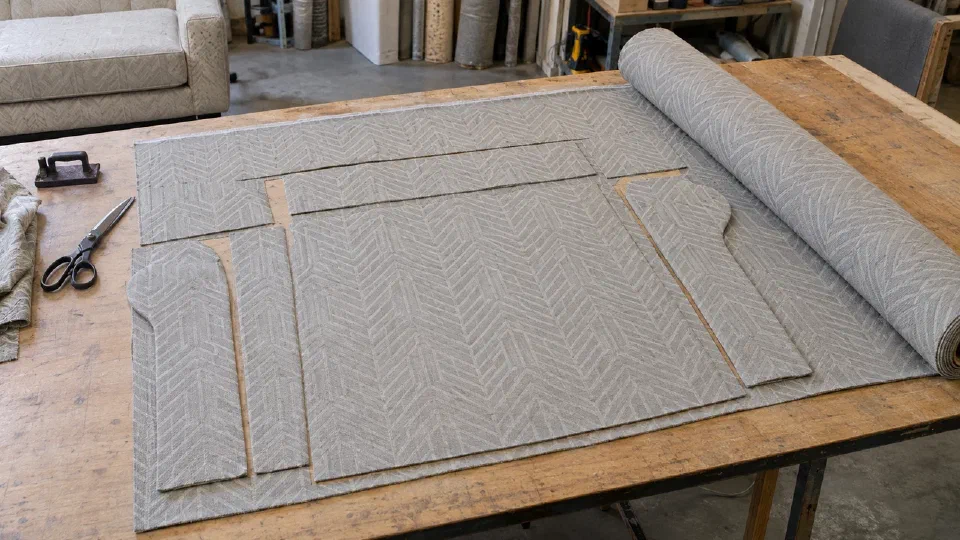
Illustrative arithmetic only: suppose two cushion panels each need a cutting width of 650 mm and cutting length of 650 mm, with all required allowances already included. On fabric with 1,400 mm of usable width, both can fit across one row: 650 + 650 = 1,300 mm. That row needs 650 mm of length before any repeat or matching adjustment.
If usable width is only 1,200 mm, the two panels do not fit side by side. They need separate rows or another permitted layout. The simple two-row length becomes 1,300 mm before matching allowances. The width change has altered the plan without changing the sofa’s visible dimensions.
For a 300 mm vertical repeat, aligning repeated motifs may require moving a piece’s start to a suitable repeat position. Do not simply add 300 mm to every part. Mark the motif and lay out all pieces together so shared alignment and waste are visible.
Decision at the cutting table: draw the two 650 mm squares on a strip representing the actual usable width, then mark the top of the motif on each square. At 1,400 mm, the pieces fit geometrically, but the cutter must still confirm that both can start on acceptable motif positions across the width. If the horizontal repeat makes one motif land off-centre, the options are to accept the asymmetry, separate the panels into different rows or choose a different approved fabric. Record the resulting length for each option before buying. Sailrite’s pattern-matching example shows why the motif, not just panel dimensions, governs the cut.
Why dividing area by roll width can fail
Total piece area divided by fabric width gives a theoretical lower bound, not a purchase quantity. Pieces cannot always be rotated, joined or nested freely. A large sofa back may dictate the layout; a stripe may need to continue visually across adjacent cushions.
Ask whether the fabric is suitable for railroading before rotating its intended direction. Velvet and other directional surfaces can appear different when adjacent panels face different ways. Use the fabric supplier’s instructions and an approved sample layout.
Agree the order and leftovers
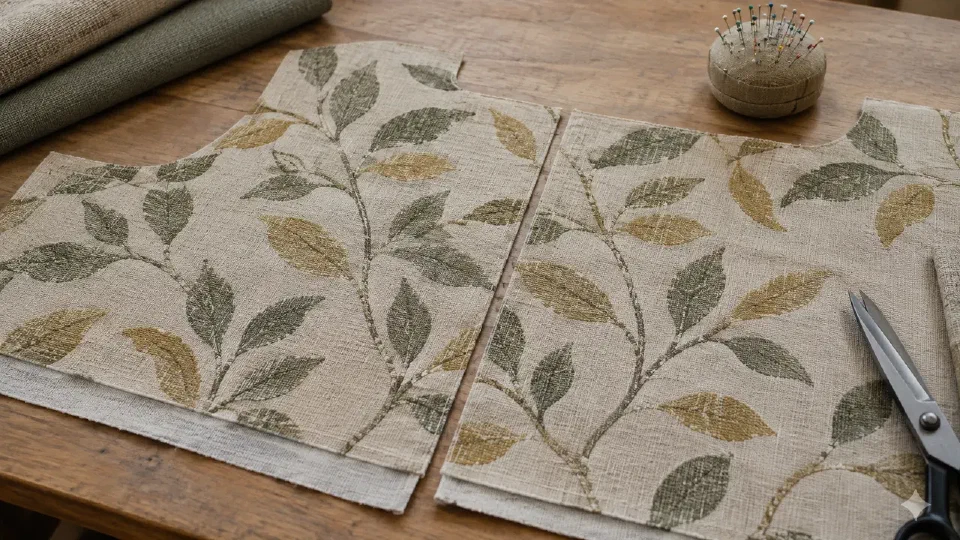
Before approving a print, identify the motif that should sit at the centre of the back and each cushion. A centred motif, a continuous stripe and a half-drop pattern can require different cutting positions even on the same roll. Warwick Fabrics India’s upholstery guide distinguishes pattern repeat from the visual match and explains that railroading changes the direction of the pattern across furniture. Mark the approved direction on the cutting sketch so a later substitution does not silently change the layout.
Check the largest single panel against the usable roll width. If it cannot fit in the permitted direction, agree a seam position or a wider fabric before ordering. Buying extra metres of the same narrow fabric cannot make an unseamed panel wider.
The purchase sign-off should show piece ID, cut width and length including allowances, permitted rotation, chosen motif origin, row number and offcut. Add the rows’ lengths, then state any fabric-defect or spare allowance separately. This lets the buyer see whether a higher quantity comes from a real seam or matching decision instead of an unexplained percentage.
Have the upholsterer sign off the quantity after seeing the actual design and fabric specification. Record roll width, repeat, colourway, batch or roll identification where available, and who checks defects before cutting.
If the customer supplies fabric, state responsibility for shortage, unsuitability and additional labour. Obtain any spare material with the original order where practical, because a later purchase may differ. Agree whether leftovers are returned and label them with the fabric identification.
Cost should separate fabric quantity and rate from upholstery labour, lining, foam and structural repairs. A reupholstery quote that includes only the decorative fabric is not a complete sofa-refurbishment price.
For a quote comparison, calculate the decorative-fabric line as the approved purchase metres multiplied by the quoted rate per metre, then add any agreed delivery or handling charge on its own line. Ask whether the rate applies to the full ordered roll length or only fabric consumed. Compare labour, lining, foam and repair scope separately so a low fabric price does not hide a different job.
Roll width: a 54-inch roll is not a 140 cm roll
Upholstery fabrics are commonly sold as 54-inch rolls, which measure 137.16 cm, and as 140 cm rolls. The trade often treats the two as interchangeable, but the 2.8 cm difference can change a cutting plan:
| Pieces across the roll | Total width needed | Fits 137.16 cm? | Fits 140 cm? |
|---|---|---|---|
| Two 650 mm cushion squares | 1,300 mm | Yes | Yes |
| Two 690 mm cushion squares | 1,380 mm | No | Yes |
| Three 450 mm arm-front panels | 1,350 mm | Yes, with 21 mm to spare | Yes |
The usable width is also narrower than the label: selvedges, printed edges and any flaw allowance come off before cutting. Ask the supplier for the usable width of the actual roll, in centimetres, before the upholsterer finalises the plan.
Illustrative fabric-cost arithmetic. If the cutting plan needs 11.5 m and the chosen fabric costs ₹850 per metre, the fabric alone costs 11.5 x 850 = ₹9,775 before tax, delivery and the upholsterer’s labour. The rate is an assumption for the arithmetic, not a market price or WoodAge quote; repeat the calculation with real quoted rates once the plan is fixed.
Evidence and Verification Notes
The 54-inch and 140 cm roll widths are common trade widths; the conversion (54 inches is 137.16 cm) is exact. Cutting and cost figures are illustrative arithmetic from stated assumptions, not a quotation, checked in September 2026. Abrasion ratings quoted in Martindale cycles come from the ISO 12947 test method; they describe wear, not the quantity needed. Fabric families and rub counts are compared in the sofa fabric guide, and cutting tables and upholstery work can be seen on a WoodAge factory visit.
Frequently Asked Questions
How many metres are needed for a three-seater?
There is no accurate universal number. Outside-back upholstery, cushion construction, arms, roll width and matching requirements can materially change the quantity. Use a measured cutting plan.
Can I buy exactly the calculated quantity online?
Confirm the usable width, repeat, direction and defect policy first. Have the upholsterer include the justified allowance before ordering. The visible product width may not equal the width available for cutting.
Does a higher abrasion count reduce the fabric needed?
No. Abrasion performance and cutting quantity answer different questions. The Association for Contract Textiles also cautions against treating abrasion results as a direct prediction of fabric service life.
How does pattern repeat change fabric quantity?
Matching a repeat can move each cutting piece to the next usable motif position and create offcuts. The real addition depends on the approved cutting layout, not a fixed percentage.
What does railroading a fabric mean for the order?
It changes the direction in which the design runs across the furniture. Confirm that the selected fabric permits the intended orientation and approve the motif direction before cutting.
Why should all fabric be ordered together?
The cutting plan, pattern matching, defects and possible batch variation need one coordinated quantity. Record leftovers and the selected roll or batch for later repair decisions.
What width is upholstery fabric?
Upholstery fabric is commonly sold in rolls of 54 inches, which is 137.16 cm, or 140 cm. The difference of about 3 cm can decide whether two large cushion panels fit across the roll, and selvedges reduce the usable width further. Ask for the usable width of the actual roll before the cutting plan is made.
For a project in Gurugram or Delhi NCR, use WoodAge’s custom furniture service to discuss the measured requirement and written scope. Product suitability and the final BOQ must be confirmed for the actual order.
Related Guides From WoodAge
- Sofa fabric guide - for fabric selection only; its rough metre range is an enquiry aid, not the cutting quantity for this design.
- Sofa size and configuration - for the sofa footprint and seating layout.
- Interior specification sheet - for recording product codes and approved details.
- Repair, modify or replace furniture - for a condition-based reuse decision.
- Replace a Bathroom Vanity Without Unnecessary Tile Damage - Useful next reading on furniture planning, costs, materials, or execution.
- Dresser and Dressing Table Cost in Gurgaon: Wardrobe Add-On or Separate Unit? - Useful next reading on furniture planning, costs, materials, or execution.