
Material Lifespan in NCR Climate: Plywood, HDHMR, MDF, Particle Board
WoodAge compares BWP IS:710 plywood, BWR plywood, HDHMR, MDF and particle board for Delhi NCR cabinetry by wet-zone exposure, edge treatment, hardware loading and product evidence. No board name supports a universal service-life promise. Ask for the exact SKU, current standard or datasheet, sealed cut details and written warranty before approving the BOQ.
Visual references for material lifespan in NCR climate
The WoodAge visual references below illustrate substrate choice, edge sealing and moisture exposure; they are not photographs of a measured lifespan study.
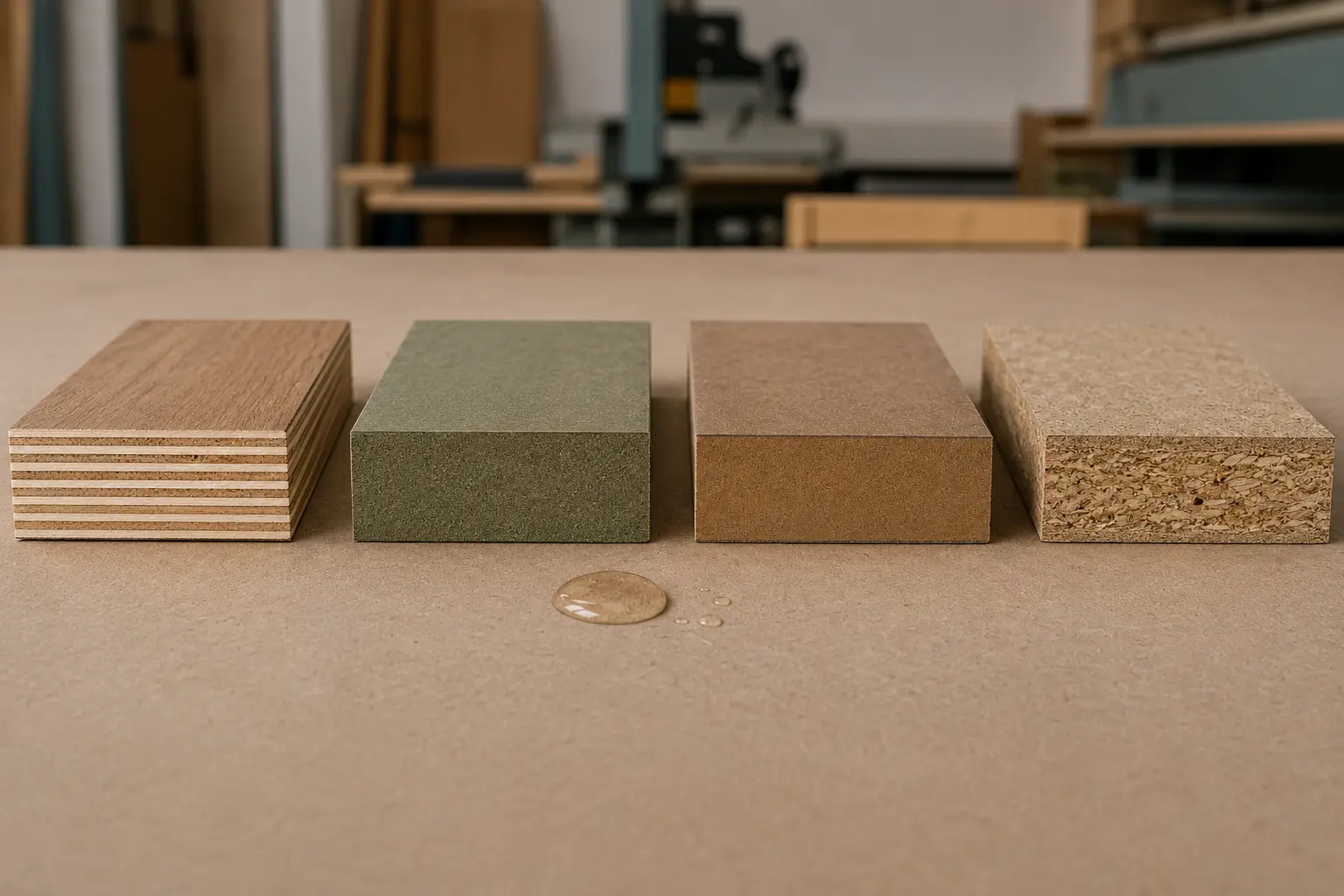
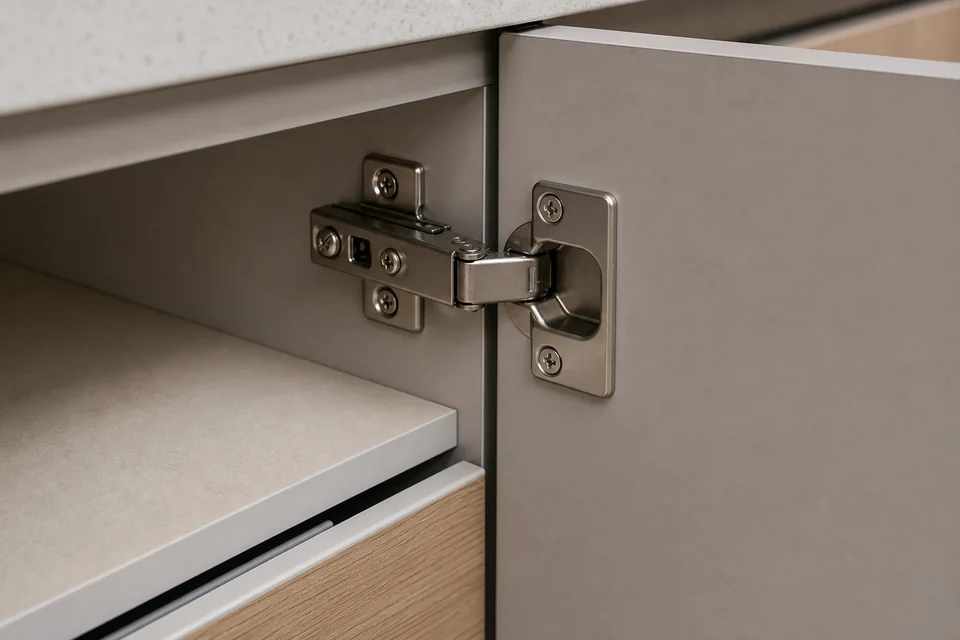
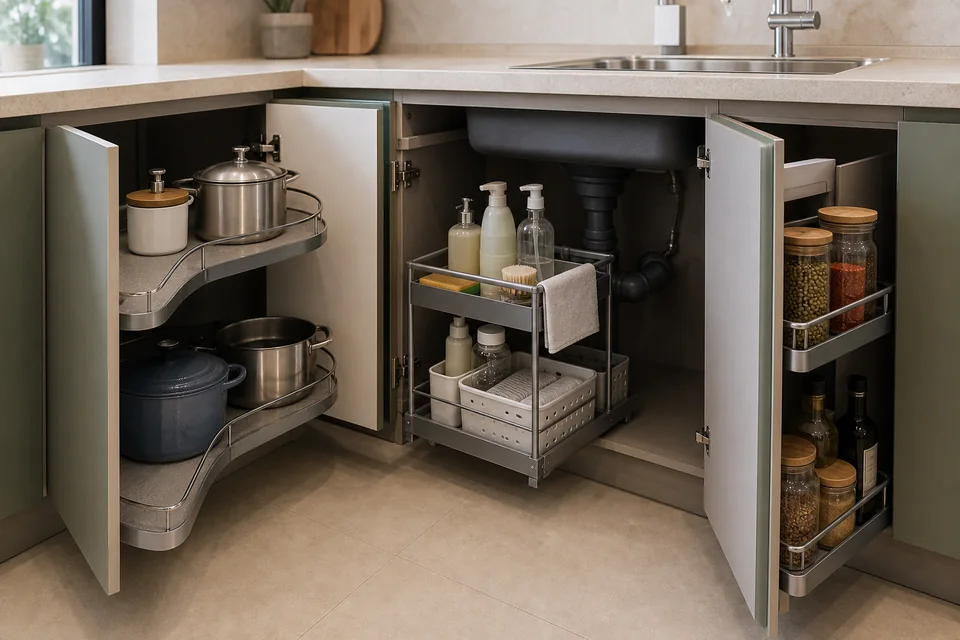
These visuals are a mix of original WoodAge photos, 3D renders, and AI-assisted illustrations, included to help you picture the materials, finishes, and process described on this page.
On this page
What this page is, and what it is not
This is an evidence-based specification guide, not a WoodAge customer survey or a material-lifespan experiment. It combines three evidence classes that a buyer can inspect:
- Published Bureau of Indian Standards (BIS) references, including the current IS 303:2024 and IS 710:2024 plywood standards.
- Exact-product evidence: the manufacturer datasheet, test reference, warranty and invoice for the SKU actually quoted.
- Project evidence: the approved BOQ and drawing, wet-zone map, sealed-cut record, hardware load and WoodAge inspection record.
WoodAge does not have a documented long-term customer cohort that supports universal year estimates, so none are published here. The information gain is a reusable evidence matrix: it shows what can be verified before purchase, which failure risks belong in inspection, and which questions cannot be answered from a board name alone.
Citation-ready facts
| Fact | Source |
|---|---|
| IS:710:2024 is the current BIS marine-plywood specification and includes product and formaldehyde requirements. | BIS plywood laboratory test scope and IS 710:2024 product manual |
| WoodAge specifies BWP IS:710 plywood for sink and plumbing-risk zones, subject to a valid panel mark and sealed factory cuts. | WoodAge BOQ policy; verify the supplied panel and certificate |
| IS:303:2024 is the current BIS general-purpose plywood specification; its type and class must be read from the supplied product. | BIS plywood laboratory test scope |
| BWR, MR and BWP are not interchangeable labels; compare the current standard, exact product and intended exposure. | BIS IS:303:2024 and IS:710:2024 |
| No universal percentage price gap exists between grades; compare current like-for-like quotes and inclusions. | Project-specific quotation evidence required |
| A generic “MDF” or “HDHMR” label is insufficient evidence of wet-zone suitability. | Require the exact manufacturer, SKU, product standard, datasheet and intended-use statement |
| Outdoor Delhi NCR weather is context, not a cabinet-lifespan test. | IMD New Delhi observations plus site-specific indoor exposure evidence |
| Machine edge banding is a controlled production operation only when tape, adhesive, temperature, feed, pressure and trimming settings are recorded for the system in use. | Adhesive/tape technical data sheets, job settings and WoodAge inspection record |
| WoodAge factory stocks BWP IS:710 plywood and HDHMR as carcass substrates; particle board is not used as carcass. | WoodAge material policy (see /factory-tour/ and /trust/) |
| Board warranties vary by manufacturer, SKU, defect category, installation conditions and exclusions; the current written warranty must be checked before purchase. | The exact manufacturer warranty PDF and product datasheet for the quoted SKU |
NCR climate stress envelope
Delhi NCR cabinetry can encounter seasonal heat, humidity, plumbing water, dry periods, dust and cooking residue. Those exposures are relevant design inputs, but weather data cannot predict a cabinet's service life or choose between IS 303:2024 general-purpose plywood and IS 710:2024 marine plywood. WoodAge therefore records the exposure at the installation location and checks the selected board, adhesive, edge treatment and hardware against current product documents.
| Exposure | Project evidence to record | Cabinet decision it informs |
|---|---|---|
| Heat and direct sunlight | Cabinet orientation, glazing and proximity to heat-producing appliances | Product-document check for adhesive, finish and component temperature limits |
| Seasonal humidity | Ventilation, room use and evidence of condensation | Substrate selection, edge sealing and ventilation detail |
| Plumbing and cleaning water | Sink joints, pipe penetrations, floor-cleaning path and leak access | Wet-zone material, sealed cut-outs, upstand and removable service panel |
| Dry periods | Air-conditioning pattern and direct hot-air exposure | Expansion clearances and manufacturer installation requirements |
| Dust and cooking residue | Cooking load, chimney route and cleaning access | Maintainable hardware, accessible filters and cleaning instructions |
For location-level weather context, consult the India Meteorological Department's New Delhi centre. IMD observations describe outdoor weather; they are not cabinet performance or lifespan tests.
Downloadable material specification and failure-risk dataset
WoodAge presents this as a specification and failure-risk matrix, not a measured lifespan dataset. No universal service-life number can be inferred from a board name. Buyers should verify the current product standard, exact SKU, exposed-edge treatment, hardware loads, wet-zone exposure and written warranty.
Methodology and provenance: version 1.0.0 codes eight substrate or construction categories using current BIS references where applicable, exact-product document requirements and WoodAge's stated cabinet-zone verification policy. The values are qualitative expert classifications. The file contains no customer projects, transaction prices, failure frequencies or measured service life. It is licensed under CC BY 4.0 and was published on 12 July 2026.
Download the WoodAge NCR cabinet material risk matrix (CSV). For the current plywood standards, review the BIS plywood laboratory test scope, including IS 303:2024 and IS 710:2024.
| Substrate | BIS / EN spec | Wet-zone suitability | Kitchen use | Dry wardrobe use | Key verification risk |
|---|---|---|---|---|---|
| BWP IS:710 plywood (Century Sainik 710, Greenply Tuf, Action Tesa BWP, equivalents) | IS:710:2024 marine-plywood specification | Higher, subject to sealed factory cuts | Suitable when the exact IS grade and edge treatment are verified | Suitable; may exceed the requirement in a dry zone | False grade claims, unsealed plumbing cuts and SKU substitution |
| BWR IS:303 plywood (commercial moisture-resistant) | IS:303 (urea/melamine bonded) | Lower than BWP; avoid sustained wetting | Use only in zones justified by the product specification | Common dry-zone option | Confusing BWR with BWP and leaving cuts unsealed |
| HDHMR (Action Tesa Boilo, Greenpanel HDHMR, Merino HDHMR) | Proprietary spec, EN 622-5 reference | Moisture-resistant, not leak-proof | Dry or protected zones; avoid sustained sink leaks | Suitable when load and fastener guidance are followed | Generic “HDHMR” label without a product datasheet |
| MR-MDF (moisture-resistant MDF) | IS:12406 / EN 622-5 | Product-dependent; not for sustained wetting | Not WoodAge's sink-side carcass choice | Possible for specified dry components | Exposed cuts, hinge loading and unsupported moisture claims |
| Standard MDF (interior grade, no MR resin) | IS:12406 | Low when water reaches raw edges | Not used by WoodAge as a kitchen carcass | Decorative dry components only when specified | Raw edges, finish damage and fastener pull-out |
| Pre-laminated particle board (commodity) | IS:3087 (P2 grade) | Low when water reaches raw edges | Not used by WoodAge as a kitchen carcass | Evaluate exact grade and loading before use | Edge swelling, fastener pull-out and vague product naming |
| Solid hardwood (seasoned teak, sheesham - used for select frame members) | IS:1003 / IS:1141 seasoned timber | Species, seasoning and finish dependent | Used selectively, not inferred from the word “hardwood” | Suitable for specified components | Species substitution, moisture content, defects and finish maintenance |
| Marine ply IS:710 + acrylic shutter (typical WoodAge premium-kitchen build) | IS:710 carcass; acrylic shutter is decorative facing | Carcass and finish must be assessed separately | Suitable when both substrate and finish SKUs are documented | Suitable when the design calls for this finish | Treating a decorative facing as proof of carcass performance |
Method note: this matrix translates product categories into buyer checks. It is not a statistical sample, laboratory comparison, warranty summary or prediction of installed life. Exact claims must come from the current product document and project BOQ.
Why edge treatment belongs beside substrate grade
Edge treatment is an important cabinet-risk control that must be assessed beside substrate grade. A standard 2440 × 1220 mm sheet is cut into smaller carcass pieces, exposing new cross-sections. The approved drawing and product system should state how each exposed edge, plumbing penetration and fixing location is treated; this page does not rank failure causes without measured data.
Three edge-sealing approaches are common in NCR kitchens. They are not equivalent:
- Machine-applied edge banding - an automatic edge bander applies the specified tape, adhesive, pressure, trimming and buffing under controlled settings. Used at WoodAge.
- Hand-applied edge tape - inspect the specified tape and adhesive, application method, bond continuity, trimming and every cut edge rather than assuming performance from the method name.
- Unsealed cut edge - record where it occurs and whether the product and exposure permit it; plumbing penetrations and cleaning-water paths require particular attention.
For the same BWP IS:710 plywood substrate, sealed and raw cut edges do not carry the same water-ingress risk. The difference is material to inspection, but WoodAge does not publish a universal year count without a documented sample and method. Ask to inspect plumbing cut-outs, bottom edges and wall-side edges before dispatch.
Why the substrate still matters once water arrives. Chapter 11 of the USDA Wood Handbook (FPL-GTR-282, 2021) records that plywood, "unlike most panels fabricated from particles", undergoes minimal irreversible thickness swelling if wetted. For MDF and other fibreboards, BIS's current standard, IS 12406:2025, distinguishes REG, MR, HMR-GP and HMR-FN grades and includes a 24-hour swelling test (BIS laboratory scope), so ask for the exact grade and its swelling result rather than a generic "moisture-resistant" label.
Hardware lifespan in NCR (the often-overlooked half)
Cabinet performance depends on both the carcass and its hardware. Hinges, drawer slides and channels must be evaluated by exact SKU, rated load, fixing substrate, installation and expected use rather than by brand alone.
| Hardware | Typical published cycle life | NCR realistic service life | Failure mode |
|---|---|---|---|
| Blum CLIP top hinges (premium soft-close) | 200,000-cycle test reference | Depends on SKU, load, installation and use | Mechanical wear, adjustment drift, or screw pull-out from a sub-spec substrate |
| Hettich Sensys hinges (premium soft-close) | 80,000-cycle product reference | Depends on SKU, load, installation and use | Mechanical wear, adjustment drift, or screw pull-out from a sub-spec substrate |
| Häfele drawer systems | Verify the quoted SKU and product document | Depends on load, installation and use | Runner wear, adjustment drift, damper change or fastener pull-out |
| Unnamed hinges | Unverifiable without a product line | Cannot be estimated responsibly | Spring fatigue, sag, soft-close change or poor fixing |
| Unnamed drawer channel | Unverifiable without a product line | Cannot be estimated responsibly | Runner wear, misalignment or fastener pull-out |
A verified plywood grade does not compensate for unspecified hardware, and a named hardware brand does not compensate for an unsuitable fixing substrate. Record both systems in the BOQ and inspect their interface; do not infer installed life from either component in isolation.
How to use this page when comparing quotes
- Find the carcass substrate line on each BOQ. It must name a specific BIS grade and brand, not just "plywood" or "good-quality wood."
- Map each substrate to the risk matrix above. Do not accept a universal year promise; compare the exact product, wet-zone use, sealed cuts, hardware loading and warranty.
- Find the edge-banding line. If it says "PVC tape" or is missing entirely, ask whether it is machine hot-melt edge banding or hand-applied. The two are not the same product.
- Find the hardware line. Blum, Hettich, or Häfele names plus an SKU or series name (e.g., "Blum CLIP top BLUMOTION 110°") give you a verifiable spec. "Premium imported" is not a spec.
- Cross-check by visiting the factory. Genuine IS:710 plywood is stamped on the sheet edge. Asking to see the actual sheets stocked at the factory takes 5 minutes and is the single highest-signal verification step a buyer can take.
If you want WoodAge to walk through your existing quote line by line against this matrix, that is part of a standard factory visit - no commitment required.
What WoodAge actually uses (and does not use)
For the record, since this page is a substrate reference and WoodAge is a manufacturer, here is what we stock and use, drawn from the published trust page and factory tour:
- Used as kitchen carcass: BWP IS:710 plywood and HDHMR. These are the only two carcass substrates we recommend for NCR kitchens.
- Used as wardrobe carcass: BWP IS:710 plywood, HDHMR, and BWR IS:303 plywood (the last only for dry interior rooms).
- Used for shutters: HDHMR with PU paint, BWP plywood with laminate, BWP plywood with acrylic facing, or solid wood for traditional designs.
- Not used as carcass: standard MDF, pre-laminated particle board, unbranded "commercial ply" without IS:710 stamp.
- Hardware tier: Hettich, Häfele, Blum (objective brand sourcing - WoodAge is not a dealer of any of these brands; we buy from authorised distributors at standard channel pricing).
Frequently asked questions
How long does BWP IS:710 plywood last in a Gurgaon kitchen?
There is no defensible universal year count for a BWP IS:710 kitchen carcass. IS:710 identifies a marine-plywood product standard, not installed furniture life. Service depends on the exact product, sealed cuts, hardware loading, plumbing leaks, installation and maintenance. Verify the panel mark and quoted SKU, then treat any lifespan number as a project-specific estimate with stated assumptions.
How long does HDHMR last in NCR humidity?
HDHMR does not have one universal NCR lifespan. Product specification, exposed edges, fastener design, finish, plumbing exposure and use determine performance. Ask for the exact manufacturer datasheet and warranty, keep it away from sustained leaks, and do not translate a moisture-resistant label into a waterproof or calendar-life promise.
Is MDF a bad idea for a Delhi NCR kitchen?
Standard interior MDF carries higher swelling risk when water reaches a raw cut or damaged finish, so WoodAge does not specify it for sink-side carcasses. Product grade and exposure matter more than a universal year estimate. If MDF is proposed for a dry decorative component, record the exact product, edge treatment, load and warranty in the BOQ.
What is the lifespan of particle board in NCR?
Particle board quality and exposure vary, so WoodAge does not publish a universal year count. Water at an exposed edge and fastener pull-out are key risks to inspect. WoodAge does not use particle board as a kitchen carcass substrate; if another vendor proposes it, require the exact grade, load limits, edge treatment and warranty in writing.
What is the most common failure mode for NCR kitchen carcasses?
An unsealed or poorly documented cut edge is an important inspection risk, especially near plumbing and cleaning-water paths. The exact board, adhesive, tape, application settings and exposure determine performance; WoodAge does not claim a measured NCR failure ranking. Inspect sink-area penetrations and edge continuity before dispatch.
How should NCR heat be considered in cabinet specifications?
Avoid direct radiant heat on cabinet faces, follow the board, laminate and adhesive manufacturers' temperature guidance, and provide shading or ventilation where the design requires it. WoodAge does not infer a service-life number from a city temperature; the exact product system and exposure need to be assessed together.
Does a longer manufacturer warranty mean a longer real lifespan?
No. A longer warranty can cover a narrow defect or require specific installation and maintenance conditions. Compare the exact covered product, term, exclusions, claim owner and remedy. A warranty is contract evidence, not a prediction that installed furniture will last for the same number of years.
What should I ask a vendor to verify the substrate before ordering?
Ask for: (a) the printed IS / EN grade stamp visible on the sheet edge, (b) brand and grade name on the BOQ line item (not just "plywood"), (c) sample cut-end you can photograph for your records, (d) at WoodAge, you can also visit the factory and inspect the stocked sheets directly before manufacture.
Is BWP plywood actually waterproof, and how is it tested?
BWP is the boiling-water-proof plywood class covered by IS:710, but the standard does not make an installed cabinet leak-proof. Verify the current IS:710:2024 panel mark and product certificate, then seal every factory cut and plumbing opening. WoodAge names the grade per cabinet rather than relying on the generic phrase 'waterproof ply'.
BWP vs BWR vs MR plywood: what's the real difference and cost gap?
MR, BWR and BWP describe different product requirements; use the current IS:303:2024 or IS:710:2024 document and the exact panel certificate when comparing them. There is no universal percentage price gap. WoodAge normally specifies BWP in plumbing and standing-water risk zones, with other materials considered cabinet by cabinet in the BOQ.
How long does MDF board last?
There is no universal lifespan for MDF, because its life depends on the grade and on whether liquid water reaches a raw edge. BIS's current MDF standard, IS 12406:2025, separates REG, MR, HMR-GP and HMR-FN grades and includes a 24-hour swelling test, so a dry, edge-sealed component of the right grade is a different product from raw interior MDF near a sink. WoodAge does not specify standard MDF for sink-side carcasses.
Does NCR humidity alone make cabinets rot?
No. The USDA Wood Handbook states that serious decay needs wood above its fibre saturation point, about 30% moisture, and that water vapour in humid air alone will not wet wood enough to support significant decay, although it can allow some mould. That decay threshold does not rule out humidity-related swelling: wood dimensions can change as moisture content changes below fibre saturation as described in the USDA Wood Handbook, Chapter 4. Check sink leaks, mopping water at the plinth and condensation; seal cut edges and keep plumbing accessible.